
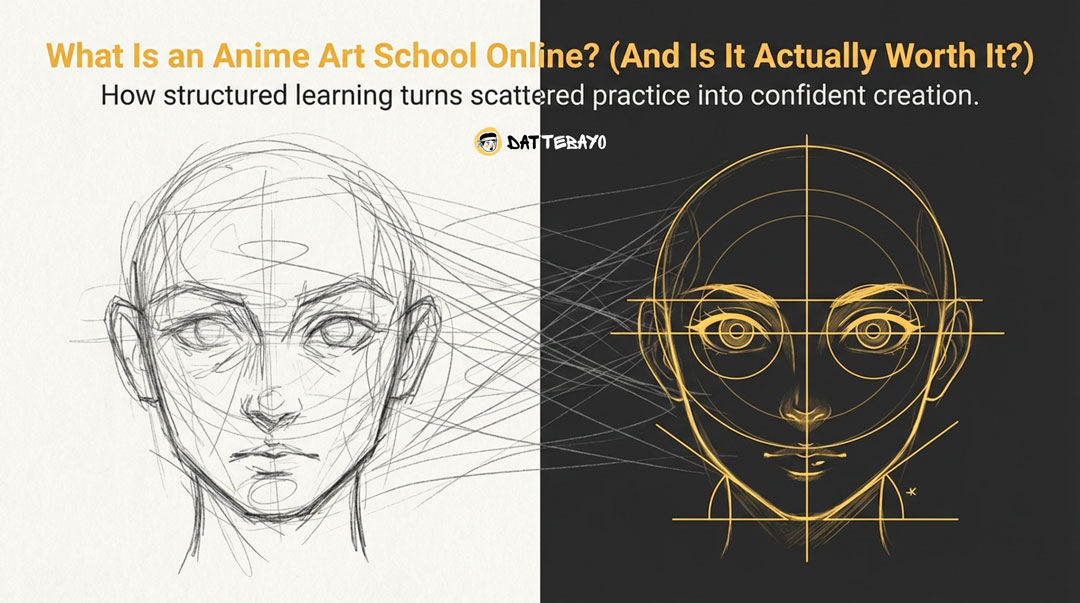
An anime art school online is a structured program that teaches you how to draw anime and manga with clear guidance—and for most beginners, it’s genuinely worth it.
If you’ve ever bounced between random tutorials or copied art without really improving, the difference is obvious. A good program doesn’t just show you what to draw—it helps you understand why things work, so you can create your own characters with confidence.
What is an anime art school online, really?
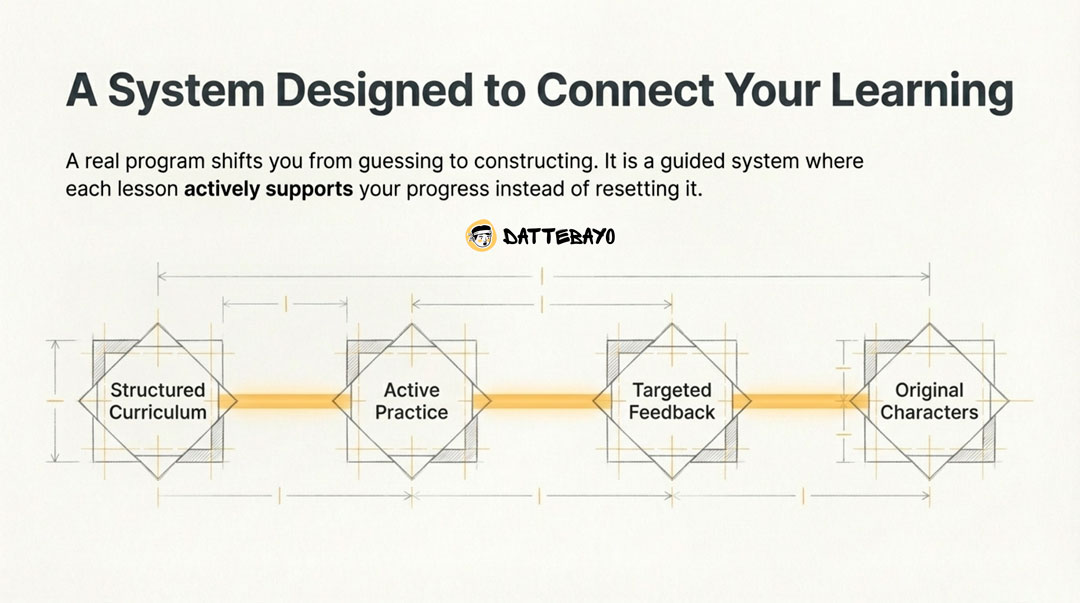
It’s a guided system that walks you from beginner basics to creating original characters, using lessons, practice, and often feedback.
Unlike scattered tutorials, a real program follows a structured curriculum. You’re not guessing what to learn next—each skill builds on the last.
- You develop control before complexity
- You understand proportions before stylization
- You construct characters from simple forms
That progression is what turns practice into actual improvement.
A strong anime art school also emphasizes active learning. You’re not just watching—you’re applying, repeating, and refining.
Watching art content feels productive. Practicing with direction is what actually improves your skills.
How is it different from YouTube or TikTok tutorials?
It comes down to structure and feedback.
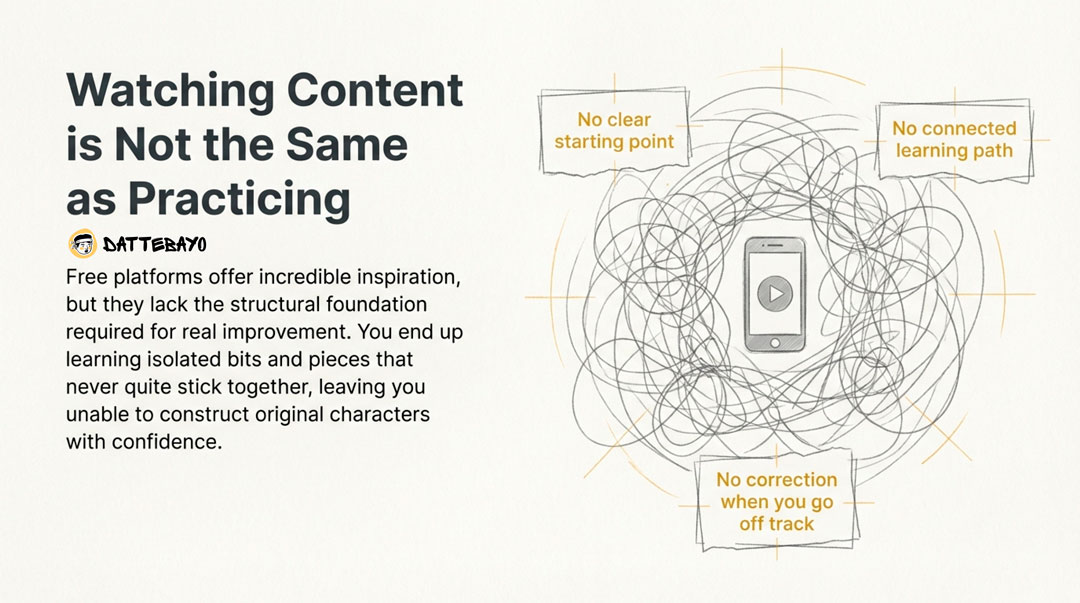
Free platforms are great for inspiration, but they usually don’t offer:
- A clear starting point
- A connected learning path
- Any correction when you go off track
So you end up learning bits and pieces that don’t quite stick together.
An anime art school online is designed to connect everything, so each lesson supports your progress instead of resetting it.
What does a real learning path look like?
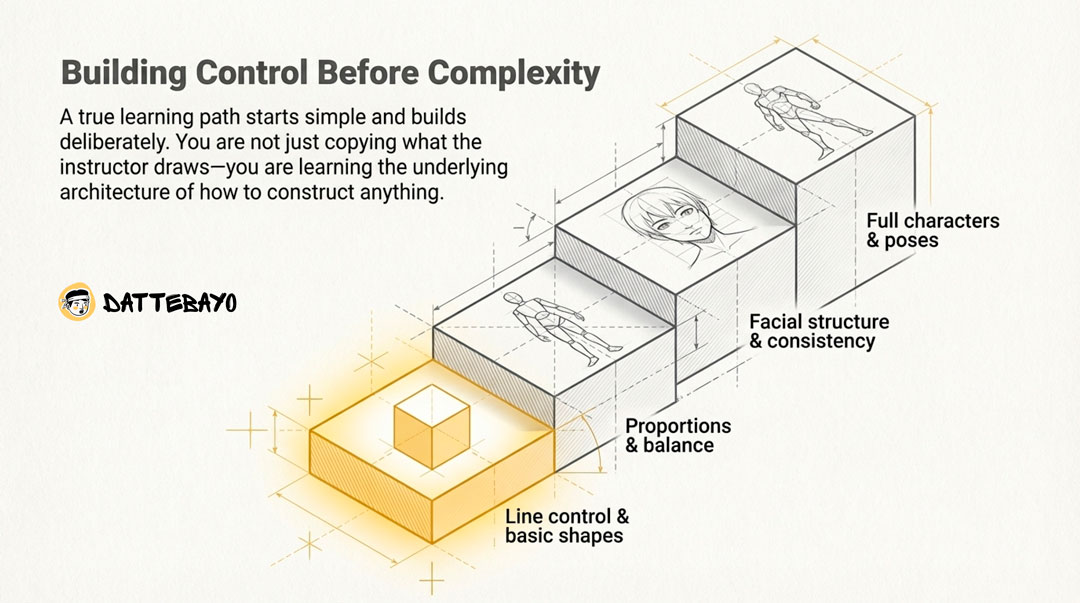
It starts simple and builds up deliberately.
A typical path moves from:
- Line control and basic shapes
- Proportions and balance
- Facial structure and consistency
- Full characters and poses
You’re not just copying—you’re learning how to construct.
Types of online anime art schools (and which one fits you)
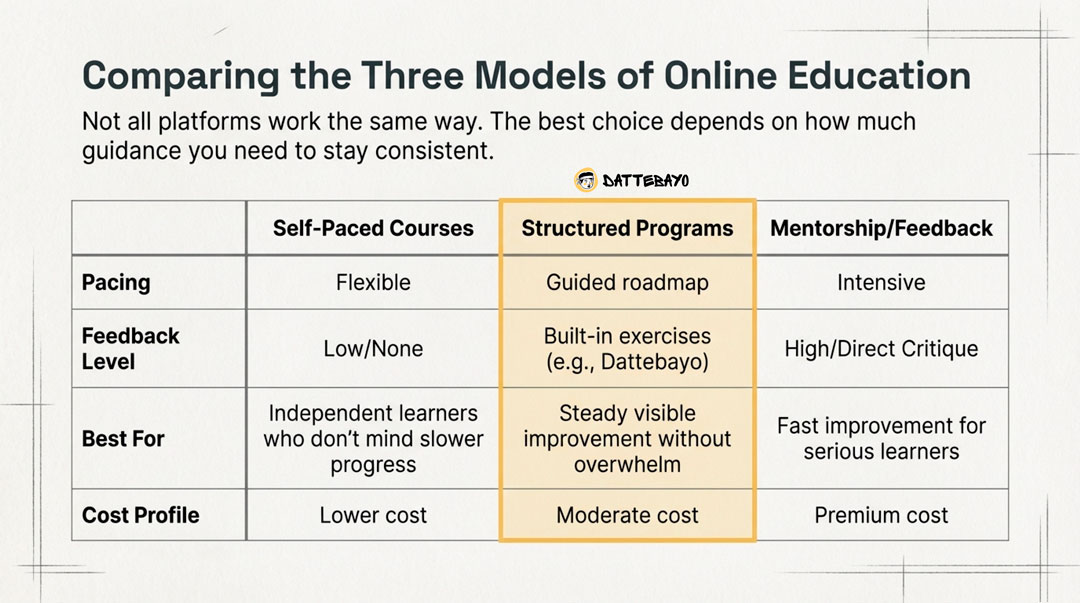
Not all programs work the same way. The best choice depends on how you like to learn and how much guidance you want.
Self-paced courses (flexible but limited feedback)
These let you learn on your own schedule, which is great for flexibility.
The downside is little to no correction. If something doesn’t click, you may not notice.
They work best if you:
- Stay consistent on your own
- Can spot mistakes independently
- Don’t mind slower progress
Structured programs with assignments
These give you a clear path and practice built into the learning process.
You get:
- A roadmap to follow
- Focused exercises
- Steady, visible improvement
Platforms like Dattebayo focus on this approach, keeping things beginner-friendly without overwhelming you.
Feedback or mentorship-based schools
These include critique or coaching, which makes a big difference.
You improve faster because:
- Mistakes are corrected early
- Feedback is specific to your work
- You learn how to think, not just what to draw
If you’re serious about improving efficiently, this is usually the strongest option.
Are online anime art schools good for complete beginners?
Yes—good programs are built for beginners and remove the confusion that slows you down early on.
You don’t need talent or expensive tools. You need clear guidance and consistent practice.
What beginners struggle with (and how structure fixes it)
Most beginners deal with:
- Inconsistent proportions
- Stiff drawings
- Not knowing what to practice
A structured program solves this by:
- Breaking concepts into simple pieces
- Giving you focused exercises
- Removing decision fatigue
You stop wondering what to do and start making progress.
What your first few weeks usually look like
You’ll often see small but noticeable improvements quickly.
Things like:
- Cleaner lines
- Better balance in faces
- Stronger sense of shapes
These early wins build momentum, which is key for staying consistent.
What should you look for in a good anime art school online?
Focus on how it teaches, not how much it offers.
A massive content library might look impressive, but without structure, it often leads to overwhelm—something many modern learners run into with algorithm-driven content platforms.
Here’s a simple way to think about it:
Structured curriculum (not just content libraries)
A good program teaches in a clear order so you’re never guessing what comes next.
Look for:
- A true beginner starting point
- Logical progression
- Strong fundamentals
Personal feedback and critique systems
Feedback is where a lot of real progress happens.
Without it, you’re guessing. With it, you:
- See what’s actually wrong
- Improve faster
- Gain confidence
Instructor credibility and teaching ability
Great artists aren’t always great teachers.
Look for instructors who:
- Explain clearly
- Simplify complex ideas
- Focus on why things work
For example, Dattebayo’s beginner course emphasizes clarity and structure over flashy content.
Assignments and active learning design

If it’s only videos, it’s not enough.
You want:
- Practice tasks
- Repetition
- Skill-focused exercises
That’s where learning actually sticks.
Community and accountability
Even light community interaction helps more than you’d expect.
It can:
- Keep you consistent
- Normalize mistakes
- Make the process feel less isolating
Red flags to avoid
Watch out for:
- No feedback options
- “Just follow along” teaching with no explanation
- Over-marketed courses with unclear outcomes
- Huge content libraries with no structure
How much does an online anime art school cost?
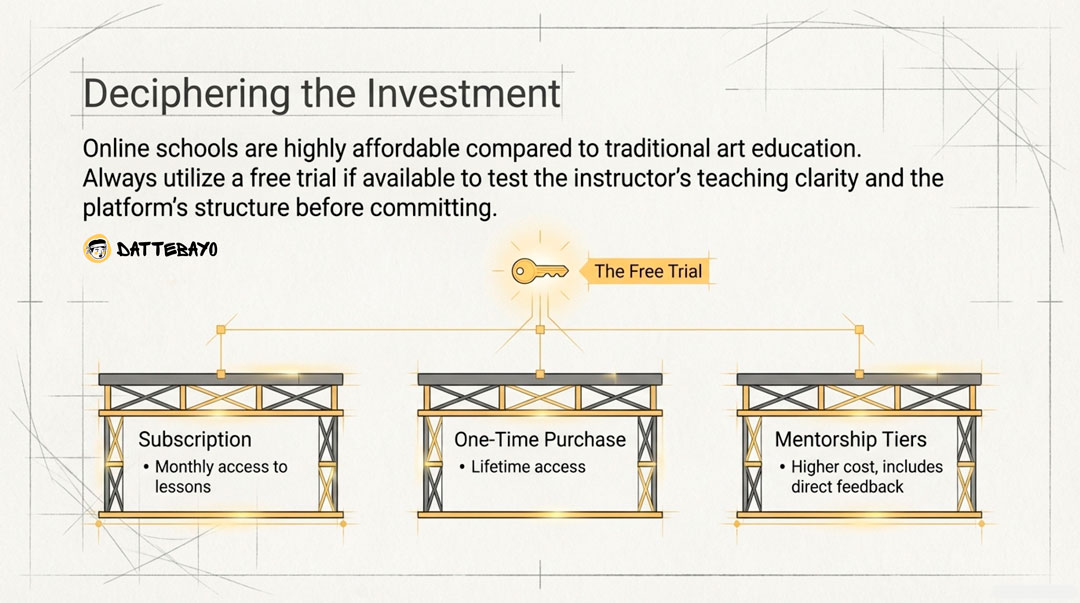
Most are affordable compared to traditional art education, with flexible pricing depending on the level of support.
Common pricing models explained
- Subscription: Monthly access to lessons
- One-time purchase: Lifetime access
- Mentorship tiers: Higher cost, includes feedback
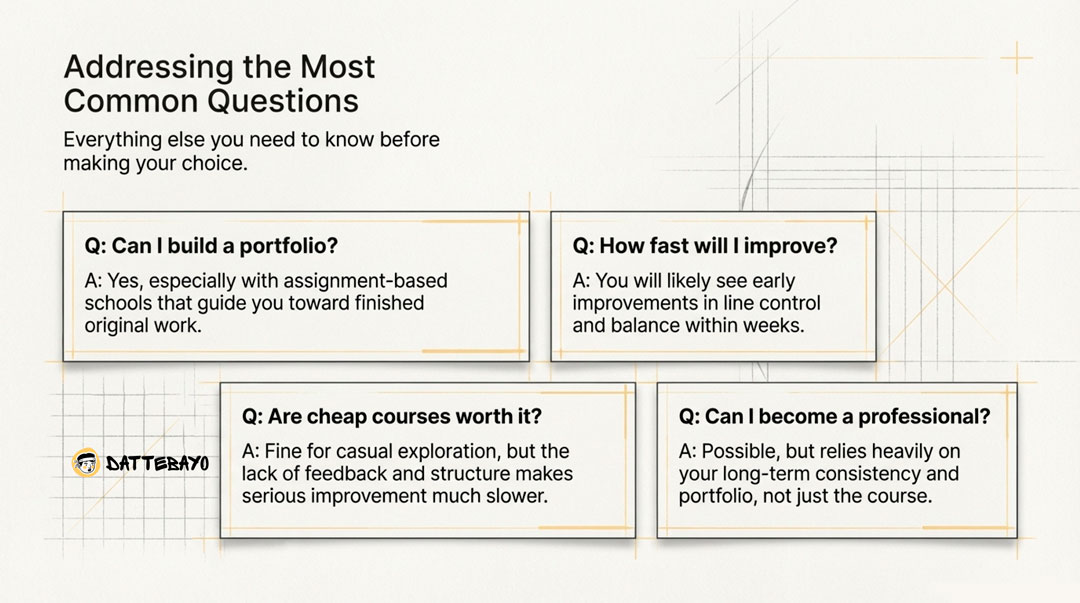
Are cheaper courses worth it?
They can be—but usually come with trade-offs like:
- No feedback
- Less structure
They’re fine for exploration, but slower for serious improvement.
Should you start with a free trial?
Yes, if it’s available.
It’s the easiest way to check:
- Teaching clarity
- Structure
- Whether it feels approachable
How fast can you improve with structured learning?
Most beginners notice improvement within weeks if they practice consistently.
The real driver isn’t speed—it’s consistency plus direction, something emphasized more in modern online education trends.
What actually speeds up progress
- Getting feedback
- Repeating core exercises
- Focusing on one skill at a time
Why some students still feel stuck
Usually it’s because of:
- Watching more than practicing
- Skipping fundamentals
- Inconsistent effort
Even the best course won’t help if you stay passive.
Do you need digital tools, or is paper enough?
Paper and pencil are more than enough to start.
In fact, simpler tools often help you focus on fundamentals without distractions.
When to switch to digital drawing
Once you’re comfortable with:
- Basic shapes
- Line control
- Simple construction
Digital tools become helpful, not overwhelming.
Common mistake: over-investing in tools
Better tools don’t create better art—especially early on.
Skill matters far more than equipment.
Which anime art school should you choose?
Choose based on how you learn best, not what looks the most impressive.
If you want fast, guided improvement
Go for structured programs with feedback.
They remove guesswork and help you improve efficiently. Platforms like Dattebayo are designed around this idea—clear progression, beginner support, and practical skill-building.
You can explore their approach here.
If you prefer flexibility and low commitment
Self-paced courses are a good fit.
They’re easy to start, but require more discipline.
If you just want to explore casually
Free or low-cost options work fine.
Just keep expectations realistic—you’ll need to guide your own learning.
How to get results after you enroll (most people skip this)
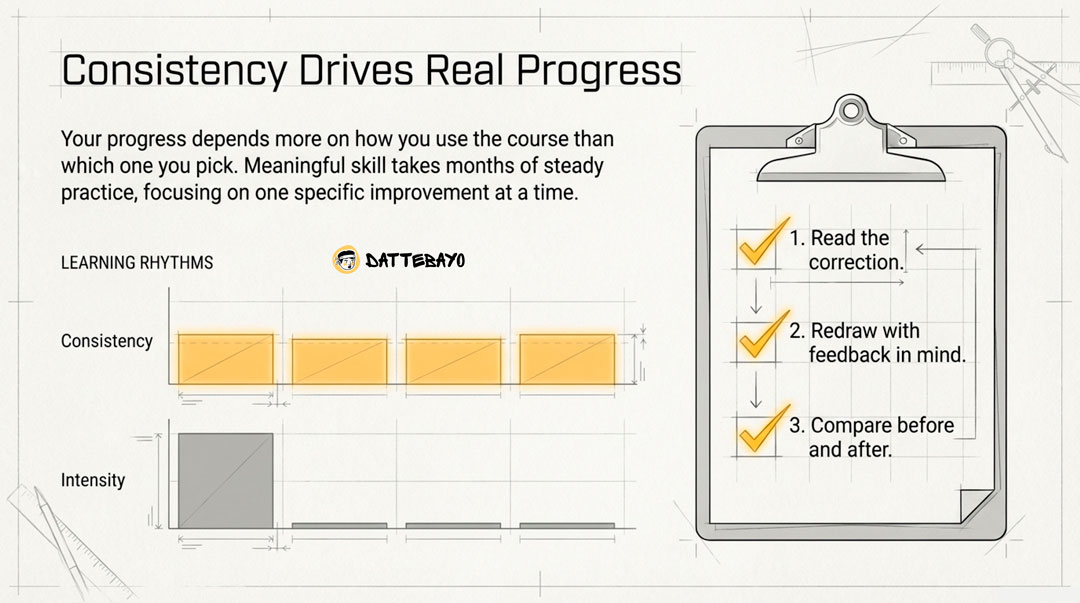
Your progress depends more on how you use the course than which one you pick.
How often should you practice?
Consistency beats intensity.
A simple rhythm like:
- 3–5 sessions per week
- Short, focused practice
…works better than occasional long sessions.
How to use feedback properly
Don’t just read corrections—apply them.
- Redraw with the feedback in mind
- Focus on one improvement at a time
- Compare your before and after
That’s where real growth happens.
Build toward a simple portfolio
Track your progress as you go.
Even a small set of improved drawings can show:
- Growth
- Understanding
- Direction
FAQ
What is the best anime art school online for beginners?
There’s no single best option—it depends on your learning style. Look for structure, clarity, and feedback rather than hype.
Are anime art courses worth it compared to free tutorials?
Yes. The structure and guidance help you improve faster and more consistently.
Do online anime art schools help you build a portfolio?
Yes—especially those with assignments. They guide you toward finished work, not just अभ्यास.
Can you become a professional artist through online anime schools?
It’s possible, but it depends on your consistency, portfolio, and long-term effort—not just the course.
What if I’m not improving even after joining a course?
It’s usually due to passive learning or inconsistency. Focus on applying lessons and using feedback.
Do these schools provide personal feedback on drawings?
Some do, some don’t. This is one of the biggest differences between programs.
How long does it take to get good at anime drawing?
You’ll likely see early improvement in weeks, but meaningful skill takes months of consistent practice.
Can I start learning anime drawing with just paper and pencil?
Yes—this is one of the best ways to begin. Keep it simple and focus on fundamentals.