
What are manga drawing lessons online (and are they worth it)?
They’re structured (or semi-structured) programs that teach manga drawing as a progression of skills—and they’re worth it when that progression is clear.
“Manga drawing lessons online” can mean anything from quick videos to full courses with assignments and feedback. The real difference isn’t the format—it’s whether the lessons are designed to build on each other.
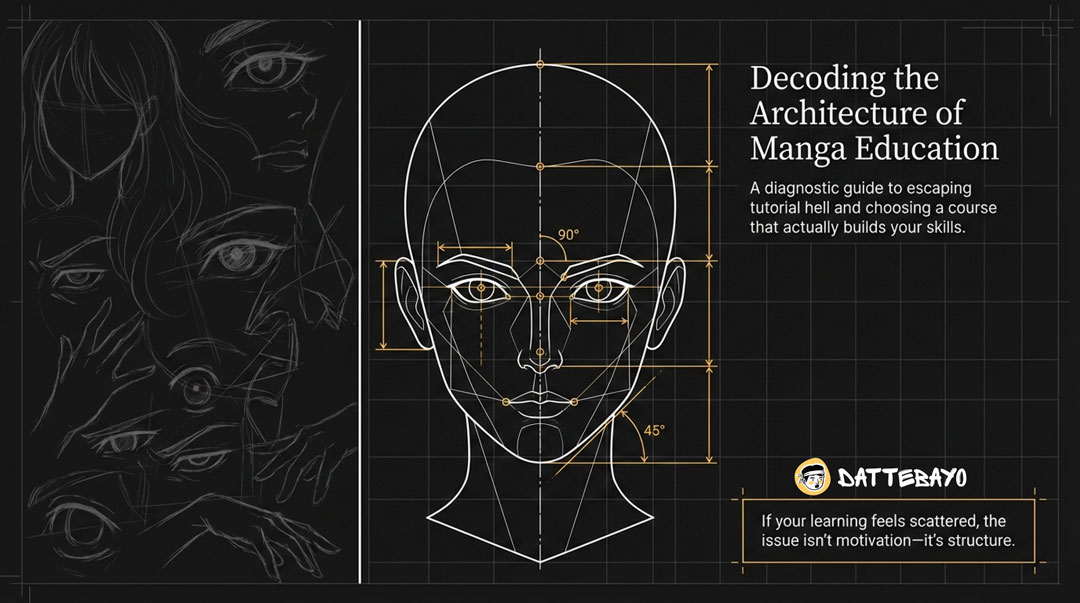
A strong course connects ideas. Simple shapes lead into structure, structure supports anatomy, anatomy informs expressions, and all of that feeds into character design. When these are taught separately, progress feels random. When they’re sequenced, improvement starts to feel predictable.
You’ll usually find three main formats:
- Marketplace courses (like Udemy or Skillshare)
- Membership platforms with large lesson libraries
- Dedicated schools (like Dattebayo) focused on anime and manga fundamentals
The format matters less than the learning path behind it.
Why beginners get stuck with random tutorials
Because most tutorials aren’t connected.
You might learn eyes one day, poses the next, and hair after that—but nothing ties them together. There’s no reinforcement and no clear “what now?”
It also encourages passive learning. Watching feels productive, but without applying what you see, it rarely sticks.
If your learning feels scattered, the issue isn’t motivation—it’s structure.
What makes a course actually effective (real signals)
Good courses don’t just show—they make you think, apply, and improve.
Look for:
- Exercises, not just demonstrations
- Assignments or checkpoints
- A clear outcome (like creating original characters)
- Built-in review of fundamentals at deeper levels
If the course helps you connect skills instead of just collecting them, you’re on the right track.
What should you look for in a good manga drawing course?
A good course builds fundamentals clearly, in order, and moves you toward creating—not copying.
Early on, clarity beats complexity. You don’t need more information—you need the right information, explained well.
Strong beginner-focused programs (including structured ones like Dattebayo) tend to emphasize:
- Simple, direct explanations
- Gradual progression
- Practice tied to each concept
- Outcomes beyond imitation
Copying vs creating: what the course prioritizes
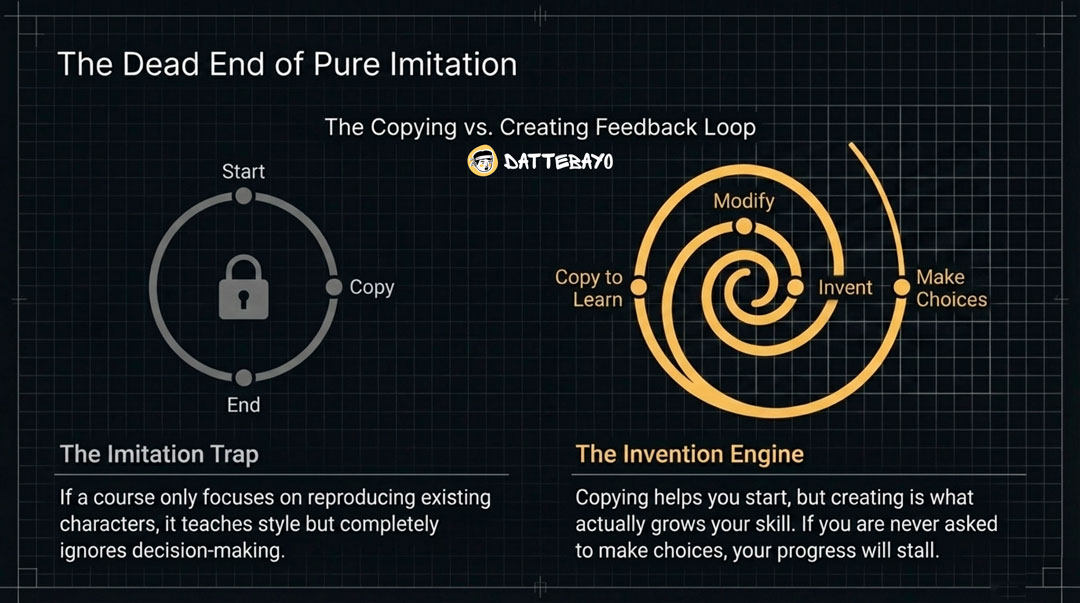
Copying helps you start, but creating is what actually grows your skill.
Some courses focus heavily on reproducing existing characters. That can teach style, but not decision-making.
A better approach:
- Copying is used as a learning tool
- You’re encouraged to modify, then invent
- You learn why things look right
If you’re never asked to make choices, your progress will stall.
Feedback, critique, and self-correction systems
Improvement depends on noticing mistakes—and knowing how to fix them.
Some platforms offer feedback from instructors or peers. Others build in self-check systems so you can evaluate your own work.
Even simple tools make a big difference:
- Side-by-side comparisons
- Clear “what to check” guidelines
- Iteration-based assignments
Without feedback, it’s easy to repeat the same mistakes without realizing it.
Red flags to avoid
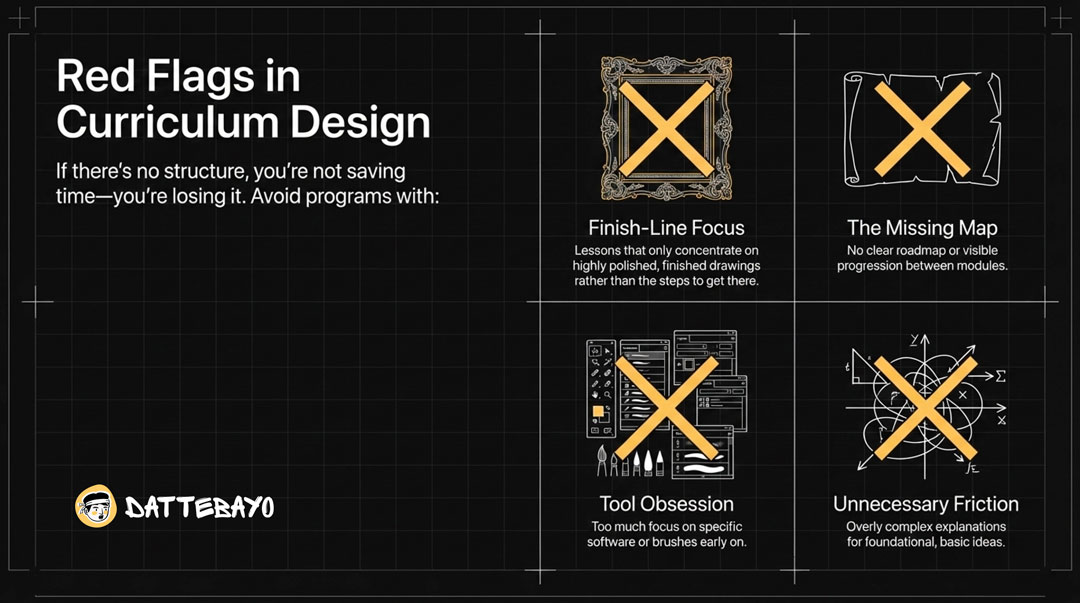
If there’s no structure, you’re not saving time—you’re losing it.
Watch for:
- Lessons focused only on finished drawings
- No clear roadmap
- Too much focus on tools early on
- Overly complex explanations for basic ideas
If it feels overwhelming and directionless, that’s poor course design—not a personal issue.
What does a good manga course actually look like?
It follows a clear progression where each skill builds on the last.
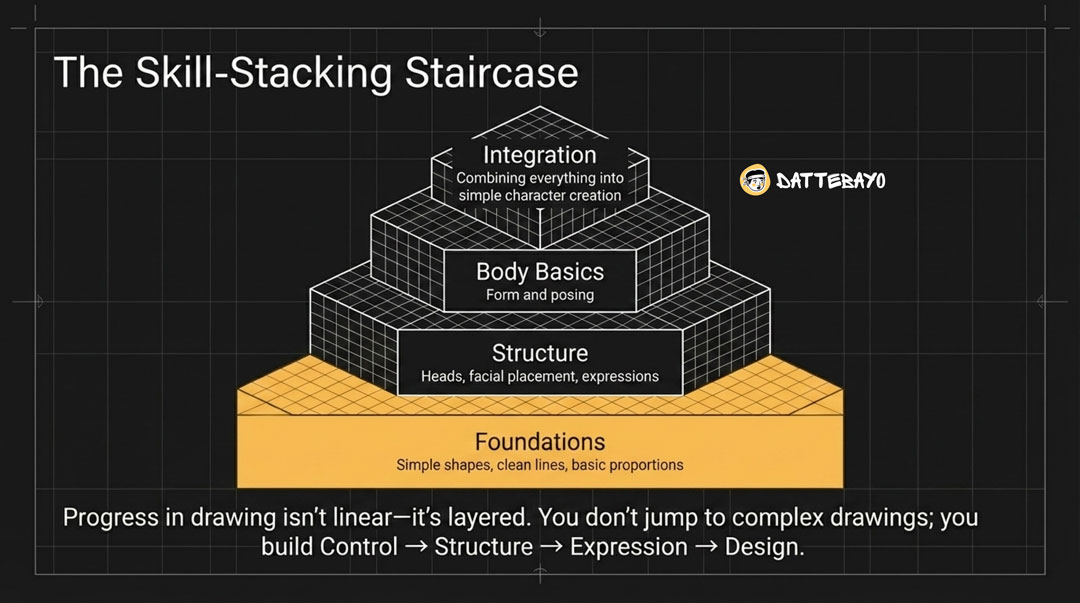
Most effective programs follow a pattern like this (even if they don’t label it):
- Foundations: simple shapes, clean lines, basic proportions
- Structure: heads, facial placement, expressions
- Body basics: form and posing
- Integration: combining everything into simple character creation
The exact pacing doesn’t matter as much as the stacking of skills.
Instead of jumping straight into complex drawings, you build:
- Control
- Structure
- Expression
- Design
And you revisit earlier ideas. Line control, for example, keeps showing up as you move forward—it doesn’t disappear after the basics.
Progress in drawing isn’t linear—it’s layered.
Programs like Dattebayo’s beginner course are designed around this idea, helping you deepen understanding instead of rushing ahead.
Are free manga drawing lessons online enough?
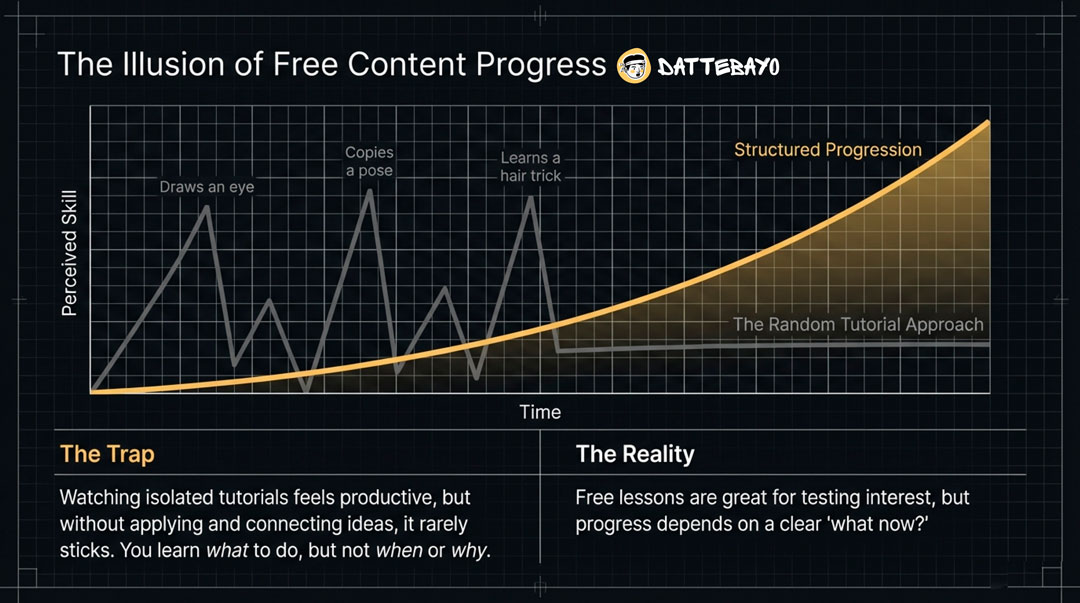
They’re great for starting—but usually not enough for consistent progress.
Free content is useful for:
- Exploring your interest
- Getting inspired
- Learning isolated basics
But it often lacks:
- Clear progression
- Consistency
- Feedback
You may learn what to do, but not when or why.
When free lessons work best
Early on, or alongside structured learning.
They’re helpful when:
- You’re testing your interest
- You’re learning very basic concepts
- You want different perspectives
When to switch to a structured course
When you feel stuck or directionless.
Common signs:
- You can copy but not draw from imagination
- Your progress feels slow despite effort
- You don’t know what to practice next
That’s where structured learning makes a difference—it gives you direction, not just more content.
How much do manga drawing courses cost (and what’s worth paying for)?
You’re not paying for videos—you’re paying for structure, clarity, and guidance.
You’ll typically see:
- Low-cost one-time courses
- Subscription platforms
- Dedicated schools with guided paths
Higher price doesn’t automatically mean better results.
Instead, focus on:
- Clear progression
- Practice and application
- Emphasis on creating, not copying
A simple, well-structured course will take you further than a large but unfocused one.
Do you need special tools to start?
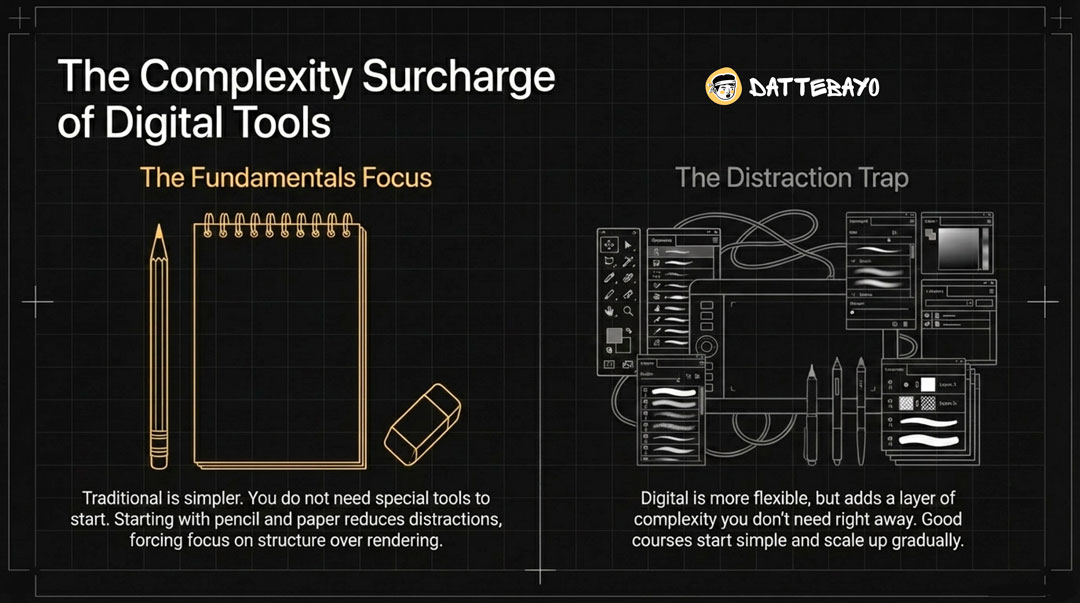
No—just a pencil and paper is enough.
Tools matter far less than how you practice. Keeping things simple early on actually helps you focus.
Basic setup:
- Pencil
- Sketchbook
- Eraser
Optional later:
- Inking pens
- Drawing tablet (Wacom, XP-Pen, etc.)
- Digital software
Traditional vs digital: what should you start with?
Traditional is simpler; digital is more flexible.
Starting with pencil and paper reduces distractions. Digital tools are powerful, but they add complexity you don’t need right away.
What most courses actually use
Good courses start simple and scale up gradually.
You’ll usually see:
- Pencil for structure
- Ink for line confidence
- Optional digital tools later
If tools are a major focus early on, that’s often a sign the fundamentals aren’t.
Live classes vs recorded courses: which should you choose?
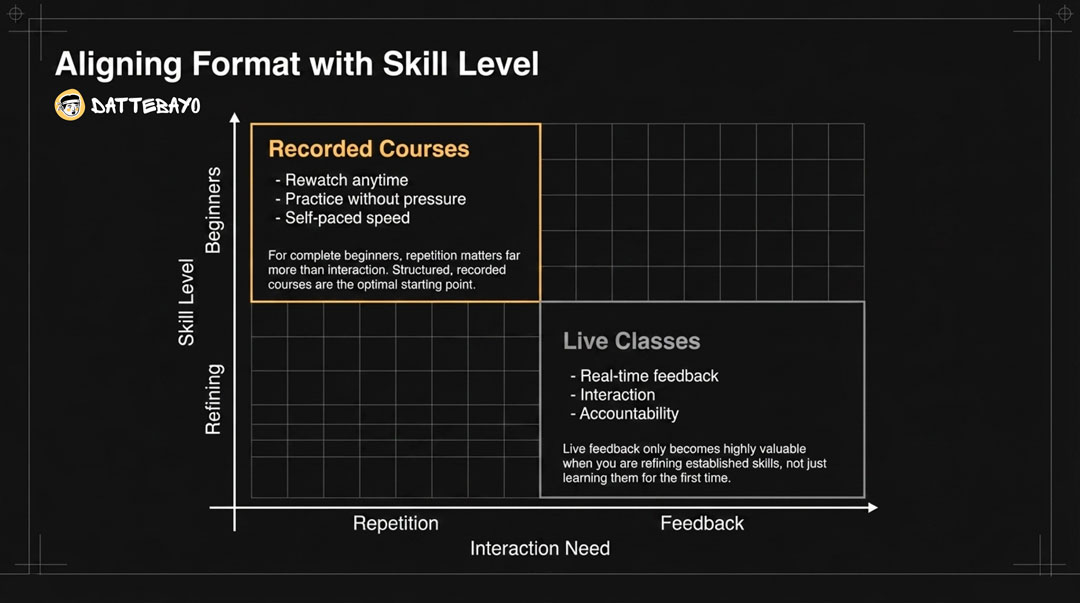
Recorded courses are best for beginners; live classes help later with refinement.
Self-paced lessons let you:
- Rewatch anytime
- Practice without pressure
- Learn at your own speed
Live classes offer:
- Real-time feedback
- Interaction
- Accountability
Best choice for complete beginners
Structured, recorded courses.
At this stage, repetition matters more than interaction.
When live feedback becomes valuable
When you’re refining skills, not just learning them.
A mix works well: structured learning plus occasional critique.
Anime vs manga lessons: which should you pick?
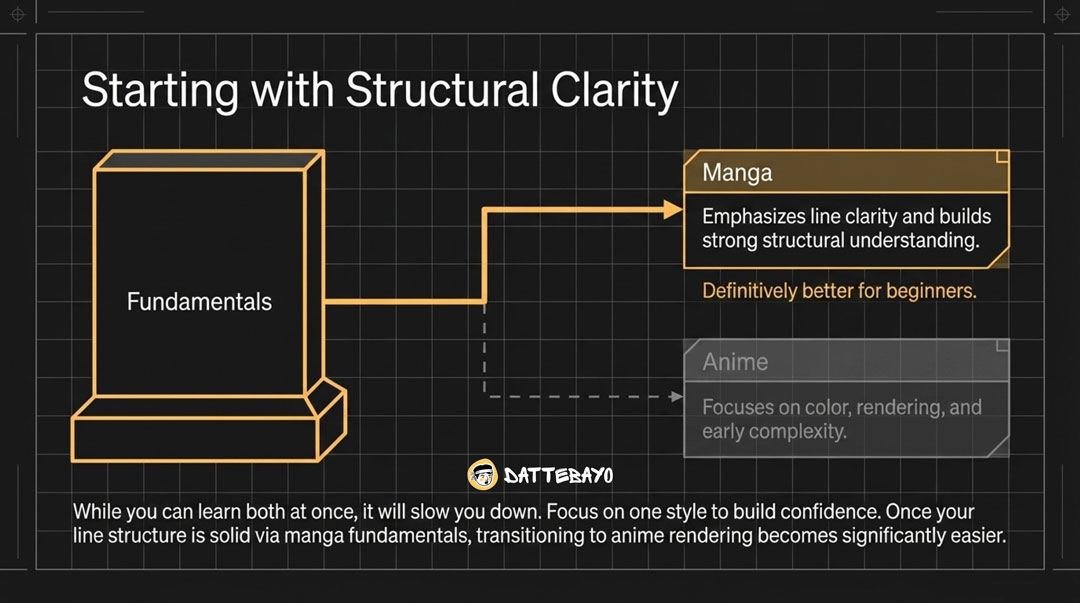
Manga-focused lessons are usually better for beginners.
Manga:
- Emphasizes line clarity
- Builds strong structural understanding
Anime:
- Often includes color and rendering
- Adds complexity earlier
Can you learn both at once?
You can—but it may slow you down.
Focusing on one style helps you build confidence faster.
Best starting point
Start with manga fundamentals, then expand.
Once your structure is solid, transitioning to anime becomes much easier.
Common mistakes when taking online manga lessons
Progress often depends more on how you learn than what you use.
Common issues:
- Watching more than drawing
- Skipping fundamentals
- Jumping between courses
- Expecting fast results
- Practicing inconsistently
How do you stay consistent and improve?
Keep practice simple, repeatable, and focused.
Try:
- Short, regular sessions
- Repeating lessons instead of rushing
- Tracking small improvements (cleaner lines, better proportions)
Consistency beats intensity.
How do you choose the right manga course for you?
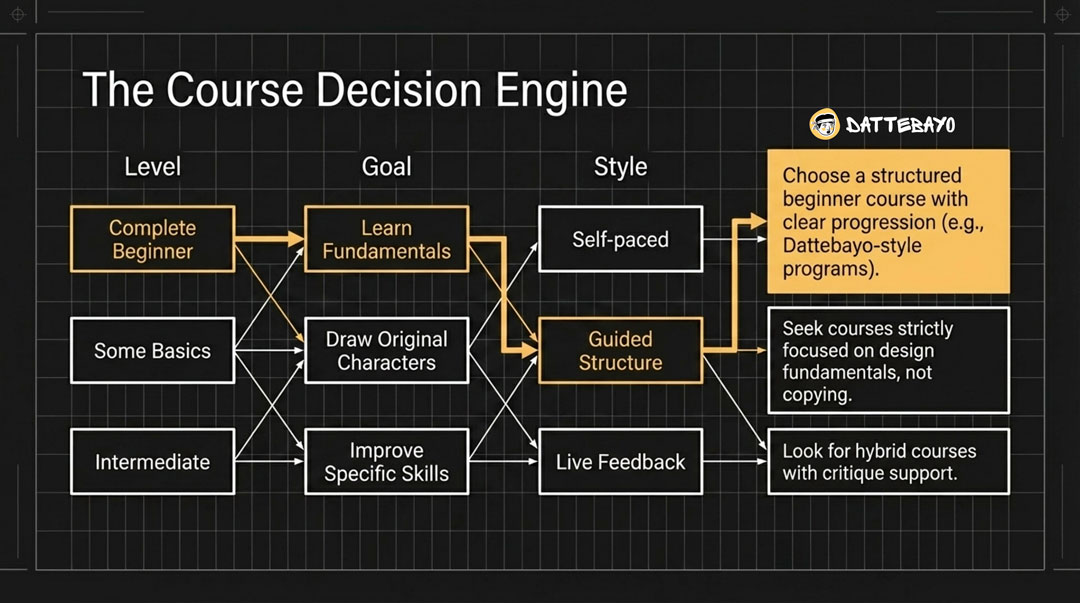
Pick based on your level, your goals, and whether the course gives you a clear path forward.
It’s easy to overthink this—but the right choice is usually obvious once you focus on structure and outcomes.
Here’s a quick way to narrow it down:
Quick decision guide
If you feel stuck copying → choose a fundamentals-focused structured course
If you feel overwhelmed → choose a guided beginner path
If you want originality → focus on character design learning
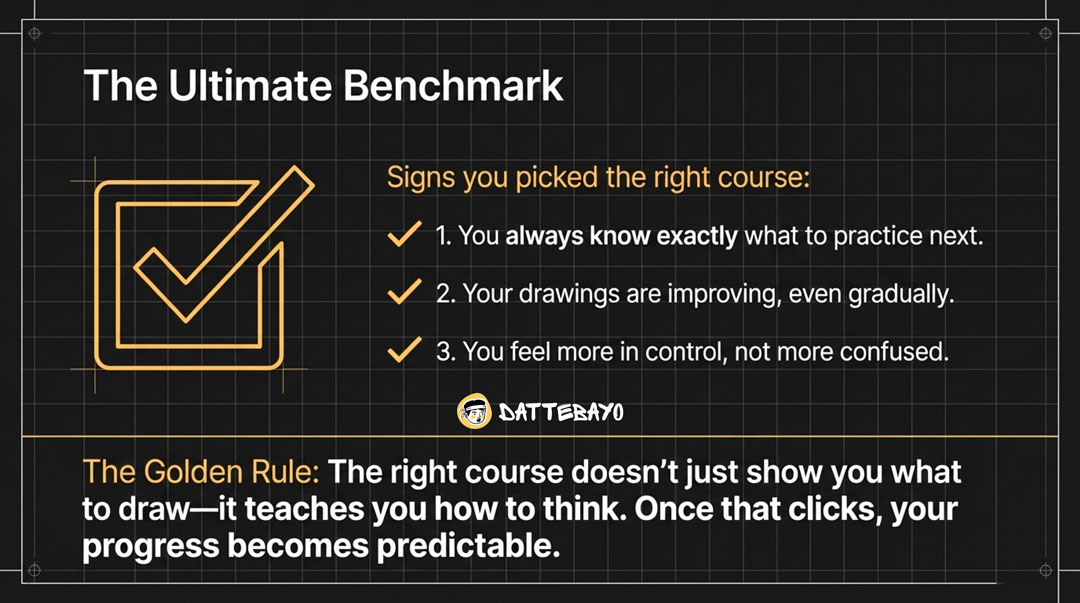
Signs you picked the right course
- You know what to practice next
- Your drawings are improving (even gradually)
- You feel more in control, not more confused
Signs you should switch
- You feel lost despite consistent effort
- You’re only copying without understanding
- There’s no visible progress
If you want a clear starting point, structured platforms like Dattebayo are built to help beginners move from basics to original characters without guessing their next step.
FAQ: Manga Drawing Lessons Online
What is the best platform to learn manga drawing online?
There’s no single best platform. Marketplaces offer variety, while dedicated platforms offer structure. Choose based on the learning path, not popularity.
Are manga drawing courses worth paying for?
Yes—if they provide progression, practice, and guidance. That’s what actually drives improvement.
Can I learn manga drawing online without a teacher?
Yes. A well-structured course can guide you effectively, even without constant feedback.
Why am I not improving even after taking drawing courses?
Usually because of passive learning, inconsistency, or skipping fundamentals. Improvement comes from applying what you learn.
How do I stay consistent with online lessons?
Keep sessions short, repeat lessons, and focus on finishing what you start.
Do I need a drawing tablet to start?
No. Pencil and paper are more than enough in the beginning.
How long does it take to get good at manga drawing?
You can see noticeable improvement within weeks of consistent practice. Strong skills take longer, but progress starts earlier than most expect.
Can online lessons help me create original characters?
Yes—if they focus on structure and design thinking, not just copying.
What should I avoid when choosing a course?
Avoid anything without structure, exercises, or a clear progression.
If there’s one thing to remember, it’s this: the right course doesn’t just show you what to draw—it teaches you how to think. Once that clicks, progress becomes much more consistent.