Getting into manga drawing can feel confusing at first. You see clean lines, expressive characters, and everything just works—but it’s hard to tell why. The good news? Manga style isn’t about memorizing complex rules. It’s about understanding a few core ideas and applying them consistently.
Let’s break it down in a way that actually helps you improve.

What actually makes a drawing look “manga”?
Manga style comes from simplification, expression, and clarity—not strict realism.
At its core, manga is stylization. Artists simplify reality on purpose so characters are easier to read and more expressive.
Instead of chasing perfect anatomy or hyper-detailed rendering, manga focuses on:
- Clear, simple shapes
- Recognizable proportions
- Strong expressions
- Clean, confident line work
If something “looks right,” it’s usually because it’s clear and consistent, not because it’s realistic.
A strong manga drawing communicates emotion instantly—before you even notice the details.
Why manga exaggerates features (especially eyes and expressions)
Exaggeration makes emotions easier to read.
Large eyes, simplified noses, and flexible proportions aren’t random—they’re design choices that help show:
- subtle feelings
- dramatic reactions
- personality differences
Think of it as visual storytelling. Bigger eyes increase emotional range, while simpler features reduce visual clutter.

Is there just one “manga style”?
No—and that’s actually a good thing.
Manga includes a wide range of styles, like:
- Shonen (bold, energetic)
- Shojo (soft, expressive)
- Seinen (more grounded or detailed)
Even with these differences, they all rely on the same foundation: clarity, stylization, and expressive design.
Where should beginners actually start? (A simple roadmap)
Start loose, think in simple shapes, and refine gradually.
Most beginners get stuck because they jump straight into details. That’s what leads to stiff, awkward drawings.
A better way to think about it:
- Begin loose and flexible
- Build simple structure
- Place features clearly
- Refine into clean lines
These aren’t rigid steps—they’re layers of thinking.
Here’s a quick way to check what might be holding you back:
Why beginner drawings look stiff
Stiffness usually comes from controlling the drawing too early.
If you commit to details or heavy lines right away, you lose flexibility. Manga drawings may look clean at the end—but they don’t start that way.
What to focus on first (priority order)
Think big before small.
A simple priority stack:
- Pose (energy and flow)
- Proportions (overall balance)
- Placement (features and structure)
- Details (hair strands, clothing folds)
If the pose and proportions don’t work, details won’t fix it.
Your first manga drawing: what actually matters?

Keep it simple and aim to finish.
Your goal isn’t perfection—it’s completion.
Many beginners stall because they try to do too much too soon. Instead:
- Choose a simple character idea
- Limit the amount of detail
- Focus on finishing the drawing
Finishing builds confidence—and that’s what keeps you improving.
If you want a clearer path, beginner-focused platforms like Dattebayo (for example, their manga drawing course) are built around this idea: simple foundations first, then gradual complexity.
How do you construct a manga character without it falling apart?
Treat the face, hair, and expression as one connected system.
Manga characters feel “right” when everything works together. If you treat each part separately, things start to look off.

How should you think about placing facial features?
Placement matters more than detail.
A few useful guidelines:
- Eyes usually sit around the middle of the head (or slightly lower in stylized faces)
- The gap between the eyes is roughly one eye width
- Nose and mouth are simplified and placed intentionally
A common issue is placing features too high or crowding them together.
Why should hair be treated as shapes, not strands?
Hair is about design, not individual lines.
Instead of thinking in strands, think in:
- large shapes
- flow and direction
- grouped sections
This is what gives manga hair its clean, stylized look.
How does expression affect the whole face?
Expression involves the entire face—not just the mouth.
Eyes, eyebrows, and even head tilt all shift together.
If only one feature changes, the expression won’t feel convincing.
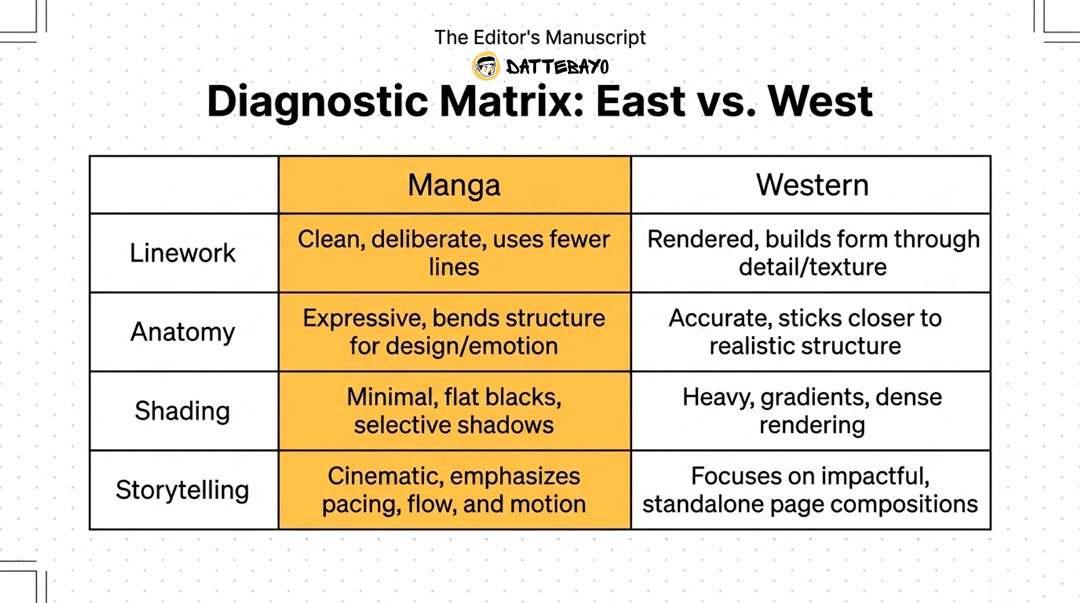
How do body proportions and pose influence the manga style?
Even stylized characters need believable structure and dynamic poses.
You don’t need advanced anatomy, but you do need a basic understanding of how the body fits together.
Do you need anatomy to draw manga?
You need the basics—not perfection.
Focus on:
- how limbs connect
- where joints sit
- simple proportions
That alone will improve your drawings a lot.
Why does pose matter more than detail?
Energy beats detail every time.
A simple drawing with a strong pose will feel more “manga” than a detailed but stiff one.
Gesture drawing helps you capture:
- movement
- weight
- intention
If your drawings feel lifeless, this is usually what’s missing.
Do you need special tools to draw manga style?
No—basic tools are more than enough to start.
Your skill matters far more than your setup.

Pencil and paper vs tablet: what should you use?
Use whatever makes it easiest to practice consistently.
·Pencil and paper: simple, accessible, great for control
·Tablet: flexible, easy to edit, undo-friendly
If you’re unsure, start traditional and switch later if you want.
What’s a simple digital setup for beginners?
Keep it minimal.
You only need:
- a pressure-sensitive pen
- a clean, simple brush for line art
Beginner-friendly guides on platforms like Dattebayo reflect this approach—simple tools, clear focus, no overwhelm.
How does line art create that clean manga look?
Clean, confident lines with controlled thickness make drawings feel finished and readable.
Line art is where everything comes together.
Why does line thickness matter?
Line weight adds depth and focus.
Thicker lines can:
- emphasize foreground elements
- suggest shadow
- guide the viewer’s eye
Thinner lines keep things light and detailed.

Traditional vs digital inking: which is better?
Both work—what matters is control.
- Traditional: builds confidence, less room for correction
- Digital: flexible, easier to refine
Modern tools (especially in 2026) do a great job simulating real pen pressure, but the core skill—intentional line control—is the same either way.

What are the most common beginner mistakes in manga drawing?
Most issues come down to stiffness, proportions, and focusing on the wrong things too early.
The good news: all of these are fixable.
Drawing details too early
Fix: Delay details until the structure works
Ignoring pose and gesture
Fix: Focus on movement first
Inconsistent proportions
Fix: Use simple construction and guidelines
Copying style without understanding
Fix: Break drawings into shapes instead of copying outlines
How should you practice manga drawing to improve faster?
Focused, consistent practice beats random sketching.
You don’t need long sessions—you need clear goals.
What should you practice regularly?
Keep it simple:
- basic shapes and forms
- faces and feature placement
- simple poses
- line control
Even short, focused sessions make a difference.
Should you copy or create your own characters?
You need both.
- Copying helps you understand style
- Creating builds independence
Balancing the two is key to steady progress.

Can structured learning really help?
Yes—because it removes guesswork.
Instead of wondering what to do next, a structured approach gives you direction and helps you avoid bad habits.
That’s where platforms like Dattebayo stand out. Their lessons are designed to guide beginners step by step (without overwhelming you), so you can focus on improving instead of figuring everything out alone.
What’s the difference between anime and manga style drawing?
Manga focuses on line work and clarity, while anime leans more on color and motion.
They’re closely related but shaped by different mediums.
Why does manga rely more on line art?
Because it’s designed for black-and-white print.
Strong line work ensures:
- clarity without color
- readability
- efficient storytelling
Can you mix anime and manga styles?
Yes—and many artists do.
A common mix is:
- manga-style line art
- anime-style coloring
If you want a deeper breakdown, you can explore comparisons like this anime vs manga guide.
How long does it take to get good at manga drawing?
You’ll see early improvement in weeks, but real consistency takes months of practice.
Progress isn’t perfectly linear—but it is predictable if you stick with it.
What should beginners expect early on?
In the first few weeks, you’ll likely notice:
- better line control
- improved proportions
- more recognizable faces
How can you improve faster without burning out?
Keep your practice manageable and focused.
- Short sessions are enough
- Clear goals matter more than time
- Avoid jumping between too many topics
If you want to speed things up, structured programs like Dattebayo’s courses give you a clear path without the usual trial and error.
Frequently Asked Questions
Why do my manga drawings look off even when I copy them?
Because you’re copying surface details instead of understanding structure. Focus on shapes and placement first.
Do I need to learn anatomy before drawing manga?
No, but basic structure helps a lot.
Is it okay to trace manga art when learning?
It can help you analyze shapes, but shouldn’t replace actual drawing practice.
Why can’t I draw the same character consistently?
Usually due to inconsistent proportions and lack of construction guidelines.
What should I practice first to improve fast?
Shapes, proportions, simple faces, and basic poses.
What brush settings should I use for manga line art?
A simple pressure-sensitive brush is enough.
Do I need a graphic tablet?
No—it’s helpful, but not required.
What makes manga style different from regular drawing?
Stylization, clarity, and expressive design.
What’s the difference between anime and manga style?
Manga focuses on line work; anime emphasizes color and motion.
If you take one thing away from this, let it be this: manga style isn’t about drawing perfectly—it’s about drawing clearly and consistently.
Start simple, stay consistent, and build from there.