
Learning how to draw anime characters can feel overwhelming at first—but it doesn’t have to be. The real shift isn’t about talent or expensive tools. It’s about understanding how anime drawings are built and practicing in a way that actually improves your control and confidence.
This guide keeps things simple and practical, so you can start improving right away—without getting stuck in rigid, step-by-step thinking.
What’s the easiest way to start drawing anime characters?
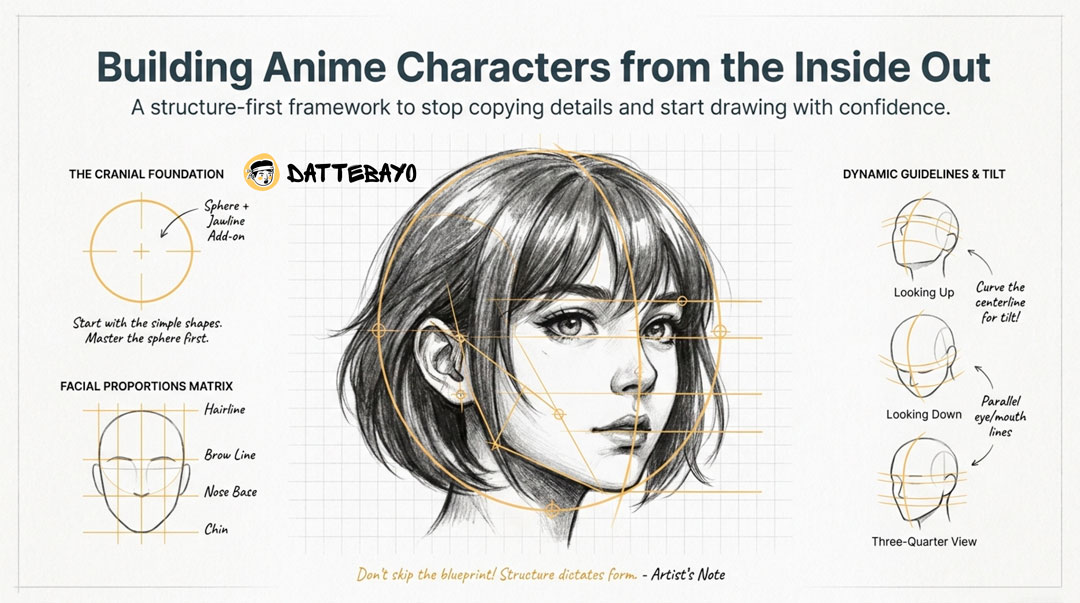
Start with simple shapes and structure—not details—so your drawings hold together.
Anime art may look detailed, but underneath it’s built from circles, lines, and basic forms. When you jump straight into eyes, hair, or outfits, things often feel “off” because there’s no structure supporting them.
Think of it like building from the inside out:
- Shapes → structure → details
- Not the other way around
Messy sketches aren’t a mistake—they’re part of the process.
Clean lines come from messy thinking first. That’s normal.
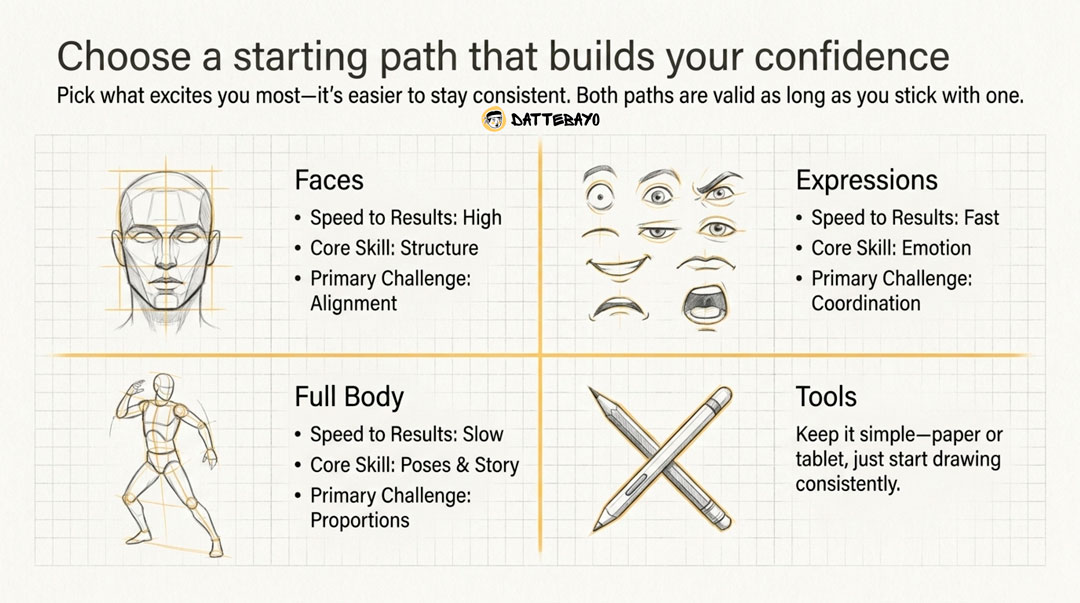
To help you decide where to begin, try this:
Why starting simple works better than copying finished art
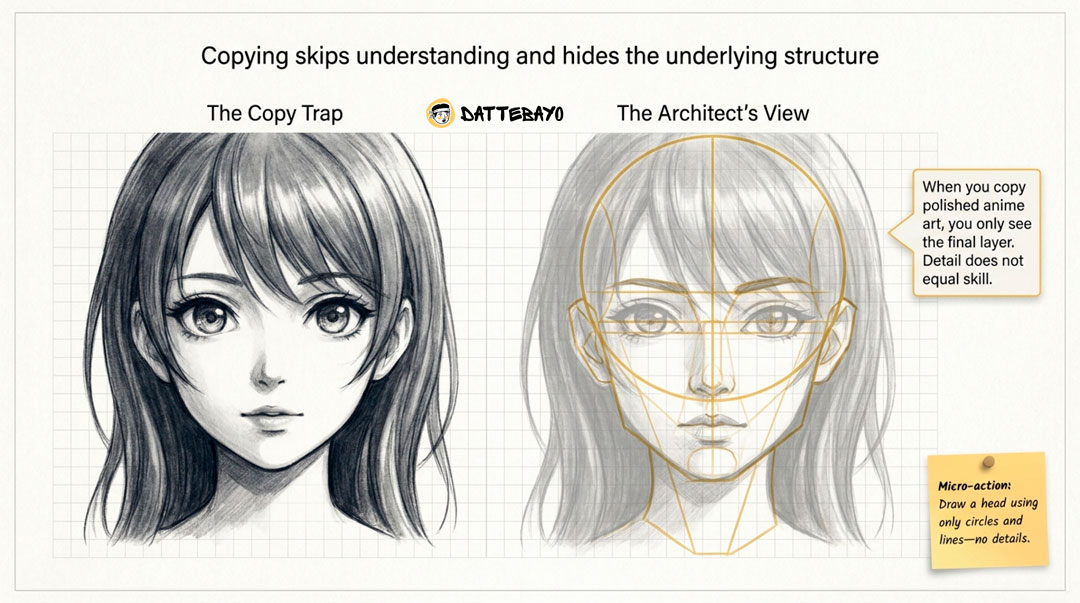
Copying skips understanding—and detail doesn’t equal skill.
When you copy polished anime art, you’re only seeing the final layer. The underlying structure—the part that makes it work—is hidden. That’s why your version can look flat or slightly “wrong.”
Instead, train yourself to notice:
- What shapes are underneath
- Where the center line is
- How the head or body is tilted
That’s how you build real drawing ability, not just imitation.
What should you focus on first: face or full body?
Start with faces for faster progress, or full bodies for stronger fundamentals.
- Faces → quicker results, easier motivation
- Full body → better understanding of poses and storytelling
Both paths are valid. The key is sticking with one long enough to improve.
Micro-action: Draw a head using only circles and lines—no details.
How to draw your first anime character (simple framework)
Think in a repeatable flow: shapes → guidelines → proportions → features → cleanup.
This isn’t about rigid steps—it’s about having a consistent way to approach every drawing so you don’t feel lost.
Building the base: shapes and guidelines
Start with simple forms:
- A basic head shape
- A center line to show direction
- A horizontal line for the eyes
For the body, begin with a loose stick figure, then build simple forms on top. This keeps everything aligned before details complicate things.
Adding structure: proportions and features
Next, you define relationships:
- Where the eyes sit
- How the head compares to the body
- Basic body structure (not detailed anatomy)
If something feels “off,” it’s usually happening here—not in the details.
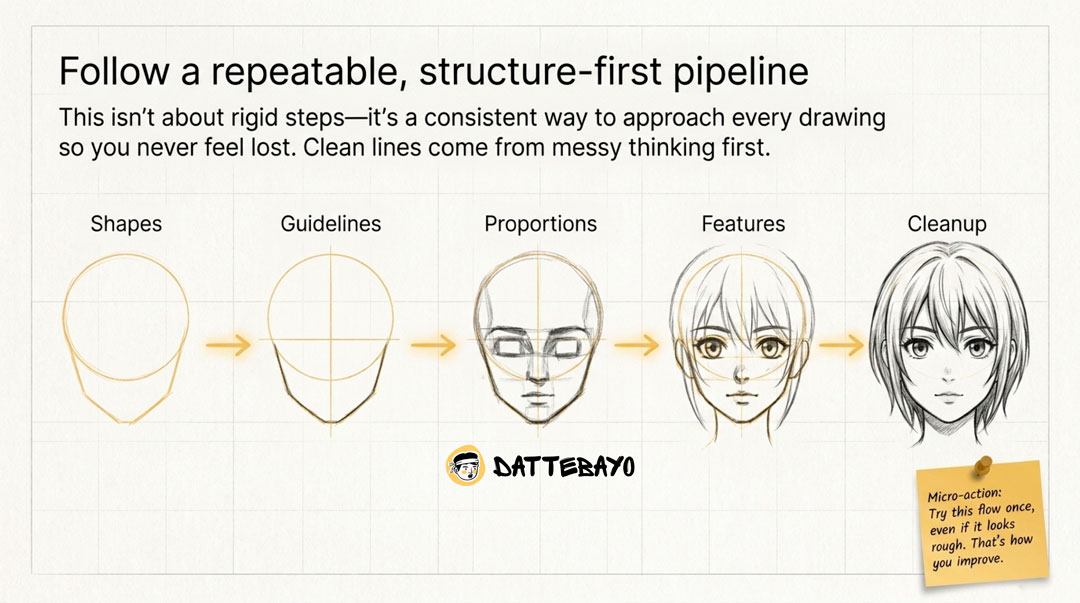
Refining the drawing
Only once the structure works should you:
- Clean up your lines
- Simplify shapes
- Add clarity
This is where your sketch starts to actually feel like anime.
Micro-action: Try this flow once, even if it looks rough—that’s how you improve.
Why do anime faces look off when you draw them?
Most issues come from spacing and alignment, not detail.
If a face looks strange, it’s usually because something is slightly misplaced:
- Eyes uneven
- Features drifting off-center
- Head angle not matching the features
Small errors add up quickly.
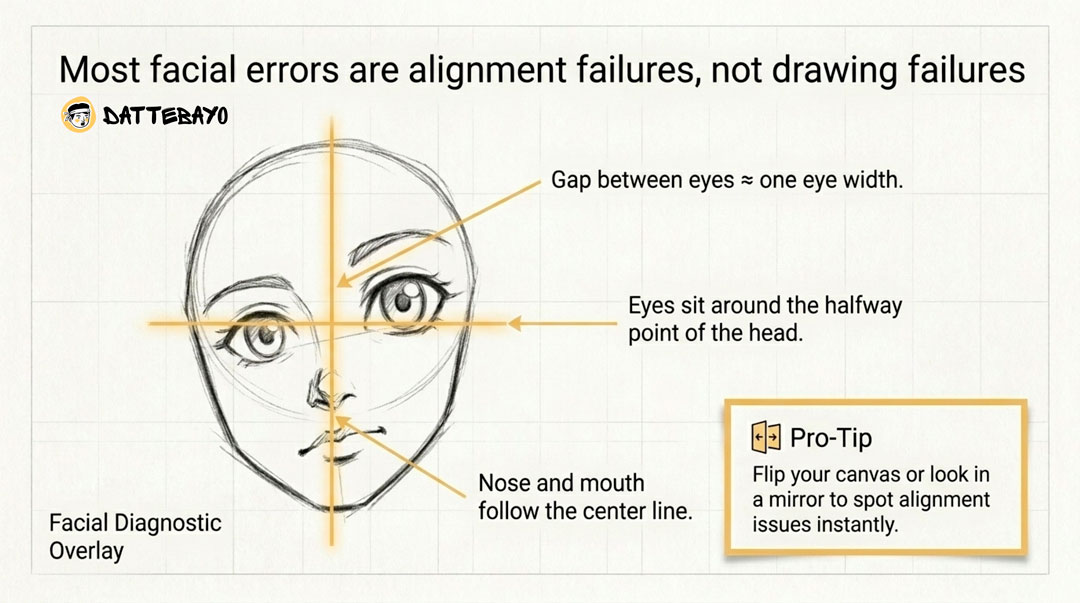
The most common face mistakes beginners make
- One eye slightly higher than the other
- Nose not aligned with the center line
- Mouth ignoring the face angle
- Skipping guidelines entirely
These aren’t big mistakes individually—but together, they throw everything off.
How to place eyes, nose, and mouth correctly
A simple way to think about it:
- Eyes sit around the halfway point of the head
- The gap between eyes ≈ one eye width
- Nose and mouth follow the center line
To check your work:
- Flip your canvas (or look in a mirror)
- Step back and view it from a distance
You’ll spot issues much faster.
If you want a deeper breakdown of facial structure, resources like Dattebayo’s anime courses expand on this in a beginner-friendly way.
Micro-action: Draw a face with guidelines, then check its symmetry.
How do anime proportions actually work?
Most anime characters fall between 5–7 heads tall, depending on style.
This simple idea helps your characters feel balanced.
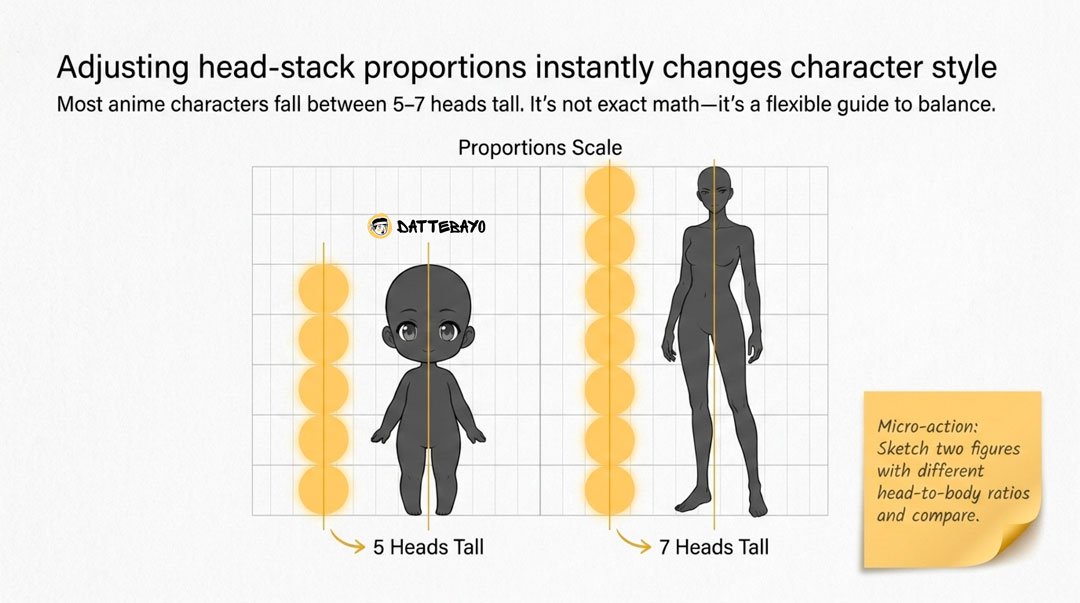
What “5–7 heads tall” really means
Imagine stacking the head vertically:
- Around 5 heads → cute, compact
- Around 6–7 heads → more typical anime proportions
It’s not exact—it’s a flexible guide.
For more structured explanations of proportions, platforms like Dattebayo focus on making these ideas easier to apply without overcomplicating them.
How proportions affect character style
- Shorter proportions → youthful, chibi-like
- Longer proportions → more mature, elegant
Changing proportions is one of the simplest ways to create variety.
Micro-action: Sketch two figures with different head-to-body ratios and compare.
Do you need anatomy to draw anime (and how much)?
You only need basic structure and movement—not detailed anatomy knowledge.
You’re not memorizing muscles—you’re understanding:
- How the body bends
- Where joints connect
- How balance works
Why beginner drawings look stiff
Stiffness comes from drawing parts instead of movement.
When you draw body parts separately, the result feels disconnected. Instead, think of the body as one flowing motion, then build structure on top.
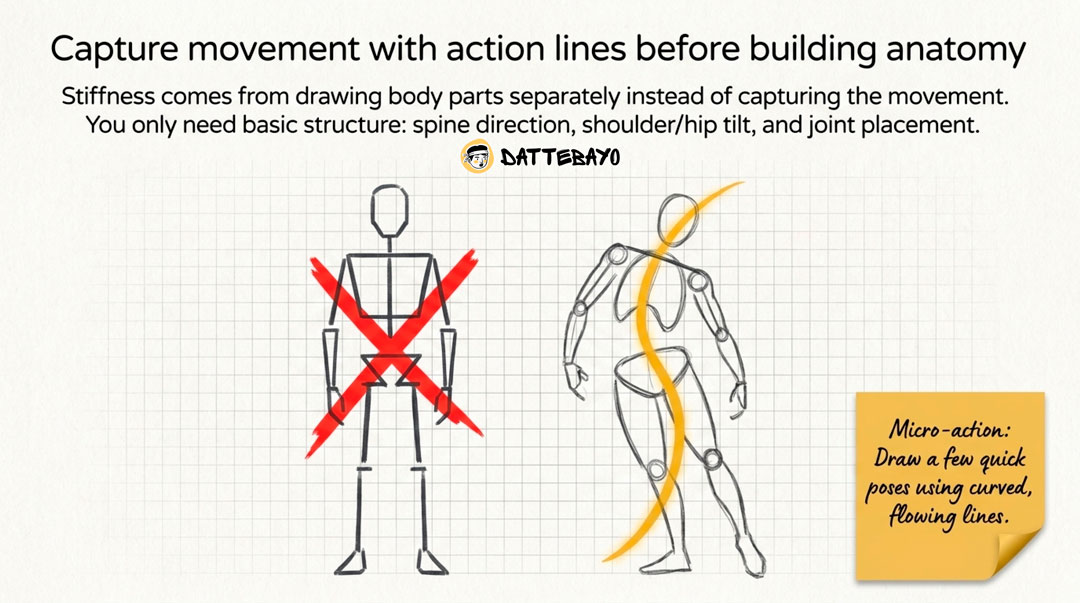
The only anatomy basics you actually need
- Spine direction
- Shoulder and hip tilt
- Joint placement
That alone can make your drawings feel more alive.
Micro-action: Draw a few quick poses using curved, flowing lines.
What makes anime characters look expressive?
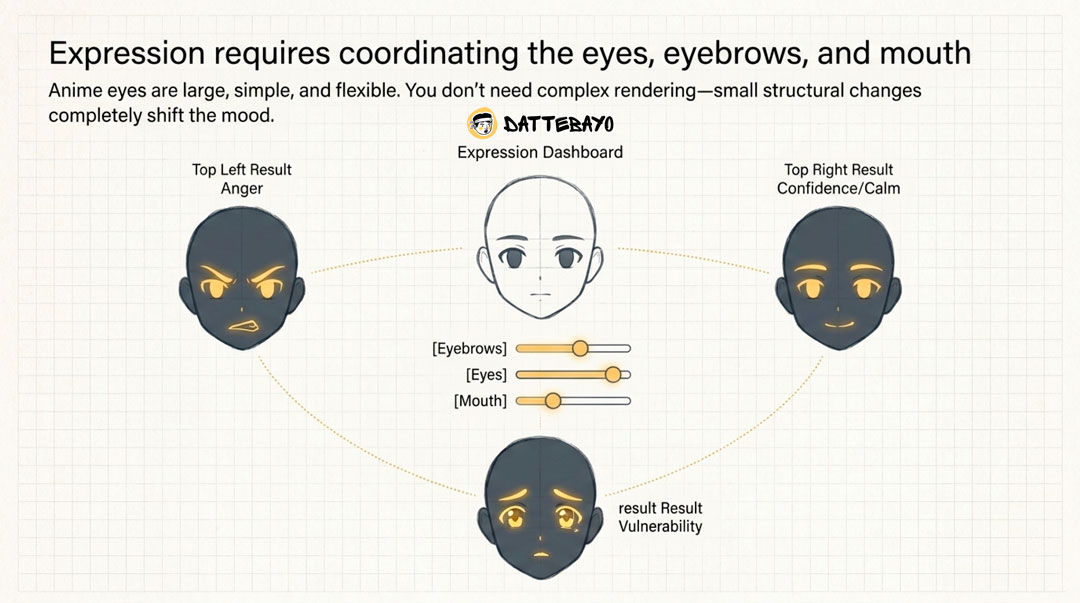
Expression comes from coordination—especially between eyes, eyebrows, and mouth.
You don’t need complex rendering to show emotion clearly.
Why anime eyes carry so much emotion
Anime eyes are designed to be:
- Larger
- Simpler
- More flexible in expression
Small changes can completely shift the mood.
Small changes that make a big difference
- Eyebrows angled down → anger or intensity
- Slight mouth curve → confidence or calm
- Larger pupils → softness or vulnerability
If you want to go deeper, focused practice on expressions (like in Dattebayo lessons) can speed up your progress.
Micro-action: Draw one face and change only the eyebrows and mouth to create different emotions.
How to draw anime hair and clothing (without overthinking it)
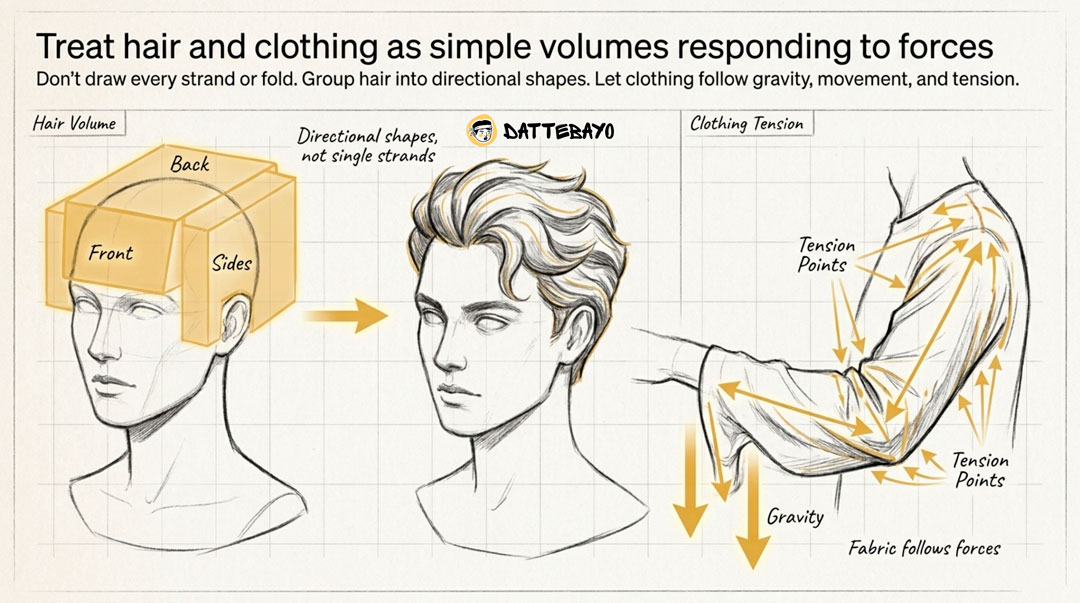
Think in simple shapes first, then refine.
This approach keeps things manageable and avoids over-detailing too early.
Why anime hair is drawn in sections
Hair is grouped into larger shapes:
- Front
- Sides
- Back
Each section has direction and volume. It’s not about drawing every strand.
How clothing behaves on the body
Clothing follows:
- Gravity
- Movement
- Tension points (like shoulders or elbows)
You don’t need complex folds—just believable flow.
Micro-action: Draw hair using a few large shapes only.
How to use references without copying blindly
Use references to understand, not to duplicate.
They’re tools to help you see structure more clearly.
A better way to study anime art
- Observe the drawing
- Break it into simple shapes
- Redraw it in your own way
How to avoid the “copy trap”
Change something:
- Pose
- Proportions
- Expression
This forces you to think instead of trace.
Micro-action: Redraw a reference using only basic shapes first.
What are the biggest mistakes beginners make?
Skipping structure, rushing details, and practicing inconsistently.
These slow progress more than anything else.
Why adding details too early holds you back
Details feel productive, but they often hide structural problems. You end up polishing something that isn’t working underneath.
The hidden mistake: inconsistent practice
Long sessions once in a while won’t help as much as short, regular practice.
Micro-action: Revisit an old drawing and rebuild it using a structure-first approach.
What should you practice to improve (simple plan)?
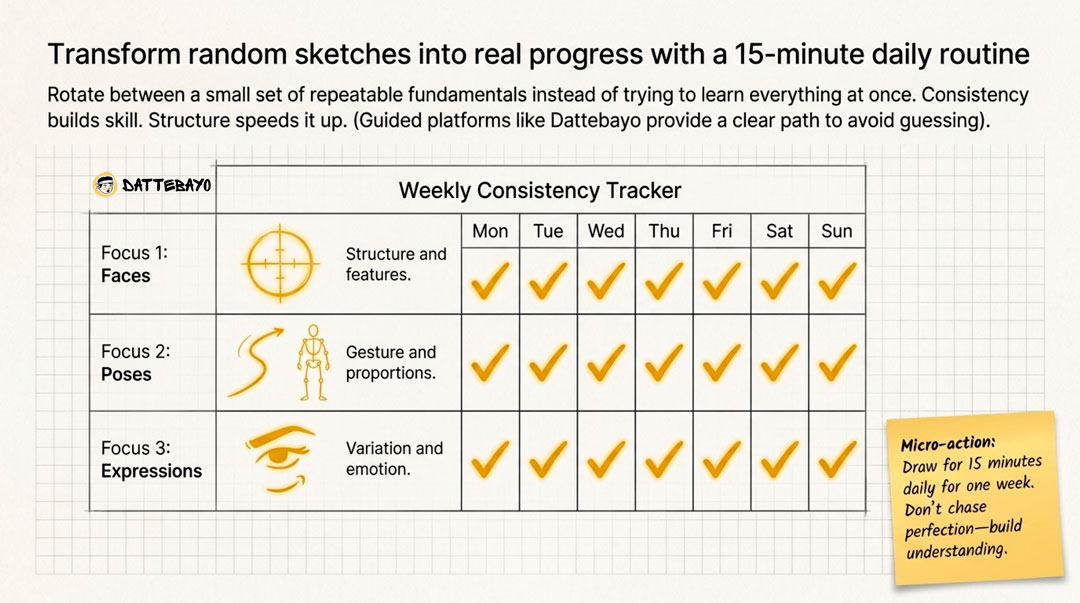
Focus on a small set of repeatable fundamentals: faces, poses, and expressions.
Keep it simple so you can stay consistent.
A simple weekly anime drawing routine
- Faces → structure and features
- Poses → gesture and proportions
- Expressions → variation and emotion
Rotate between them instead of trying to learn everything at once.
How to improve faster with structure
Random practice helps, but guided learning helps more. Platforms like Dattebayo provide a clear path so you’re not guessing what to work on next.
Consistency builds skill. Structure speeds it up.
Micro-action: Draw for 15 minutes daily for one week.
Should you draw anime digitally or on paper?
Both are valid—consistency matters more than the tool.
Digital vs traditional
- Digital → flexible, easy corrections
- Paper → better control, fewer distractions
What should beginners choose?
Start with whatever you already have. The best setup is the one you’ll actually use regularly.
How do you start creating your own anime characters?
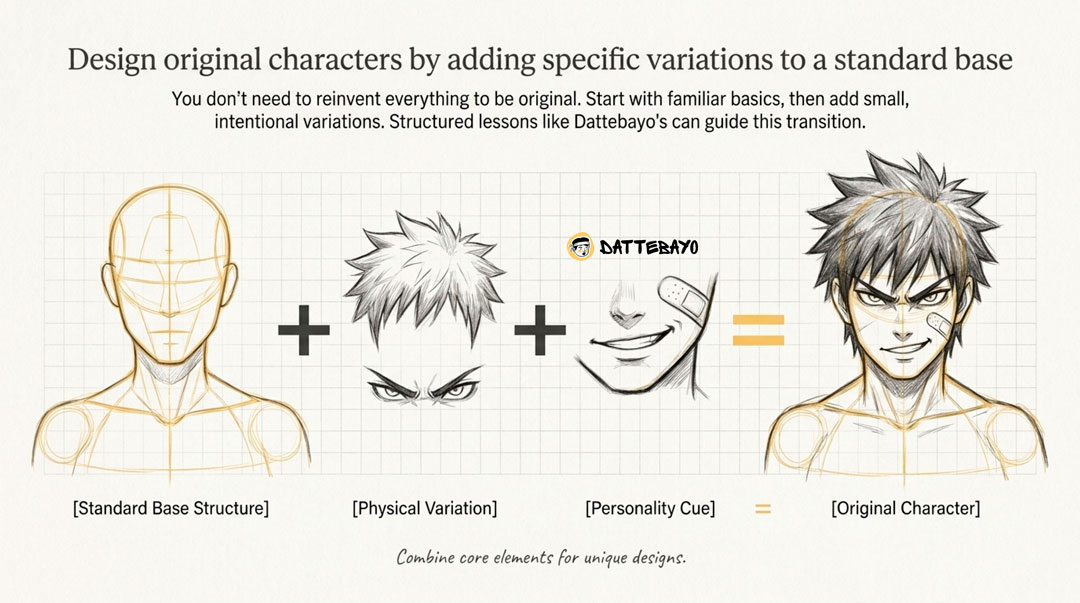
Start with familiar basics, then add small, intentional variations.
You don’t need to reinvent everything to be original.
A simple formula to follow
- Base → standard anime structure
- Variation → hair, eyes, proportions
- Personality cue → a hint of story
That’s enough to create something unique.
Easy ways to make characters stand out
- Change the silhouette
- Adjust proportions
- Add a defining personality trait
If you want a smoother transition from fundamentals to original characters, Dattebayo’s structured lessons are designed to guide that process.
Micro-action: Create one character based on a simple personality idea.
FAQ
Can I learn anime drawing without talent?
Yes. Skill comes from understanding and repetition, not talent alone.
What should I practice first when learning anime drawing?
Faces, basic proportions, and simple poses.
Why do my anime drawings look stiff?
You’re likely missing gesture—focus on flow before structure.
Why does my anime character look flat?
It usually comes down to weak structure or lack of depth.
How do I stop copying and start creating my own characters?
Use references to learn, then change key elements.
Do I need to learn real human anatomy to draw anime?
Only the basics—joints, balance, and simple structure.
Is it better to draw anime digitally or on paper?
Both work. Consistency matters more.
How long does it take to get good at drawing anime characters?
With regular, structured practice, you’ll see clear improvement within months—especially if you follow a system like Dattebayo.
What tools do beginners need for anime drawing?
Just pencil and paper or a basic tablet.
How can I make my anime characters more expressive?
Focus on how eyes, eyebrows, and mouth work together.
If there’s one thing to remember: don’t chase perfection—build understanding. That’s what turns random sketches into real progress.