If you’ve ever thought “I want to draw anime… but I don’t even know where to start,” you’re in the right place.
This guide won’t drown you in theory or walk you through a perfect drawing line by line. Instead, it shows you what actually matters so you can start today—and keep improving without feeling stuck.
Where should you actually start as a complete beginner?
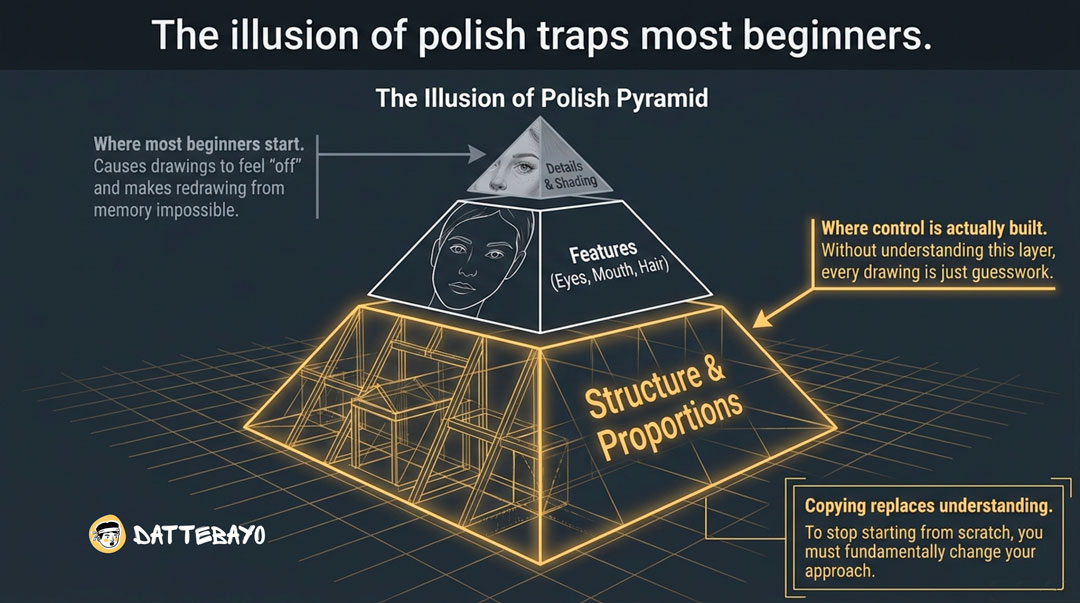
Start with simple shapes, basic head construction, and proportions—then layer details on top.
It’s tempting to jump straight into eyes, hair, and flashy details. That’s also the fastest way to end up with drawings that feel “off.”
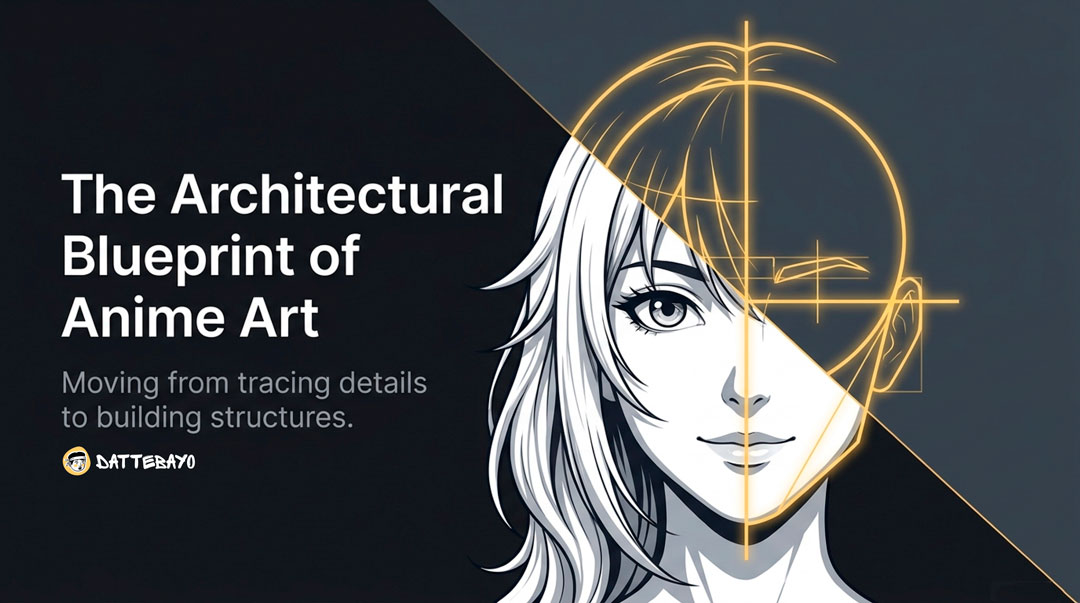
Anime and manga may look simple, but they’re built on structure. Under every stylized face is a framework of:
- circles
- guide lines
- basic 3D forms
So instead of “drawing a face,” think of it as building one piece by piece.
Quick clarification:
- Anime usually refers to the visual style
- Manga refers more to comics and storytelling
In practice, they overlap—and both rely on the same core drawing principles.
Why do most beginners get stuck early?
Because copying replaces understanding.
Two common patterns:
- You copy something that looks decent… but can’t redraw it later
- You focus on details while the underlying structure is off
That’s where frustration kicks in.
If you don’t understand the structure, every drawing feels like starting from scratch.
What’s the core idea you should focus on?
Build first. Decorate later.
Good drawings come from correct placement—not extra detail.
Light construction lines help you:
- keep proportions consistent
- align features correctly
- fix mistakes early
This idea shows up a lot in Dattebayo’s teaching approach because it turns drawing from guesswork into something you can actually control.
How does an anime face come together?
It’s all about relationships between shapes—not memorizing steps.
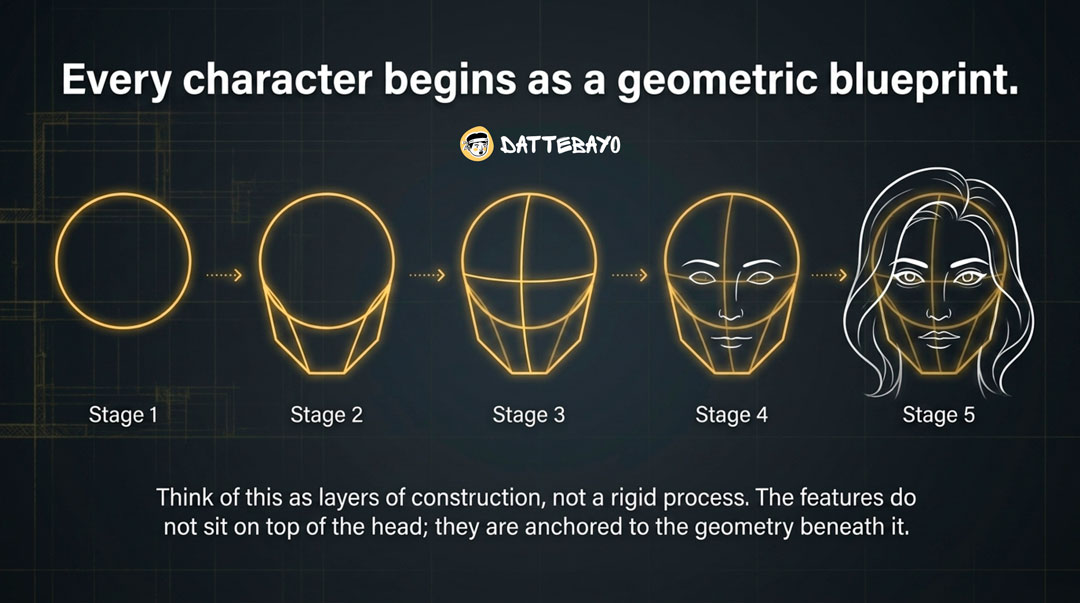
At a high level, an anime face is built from:
- a rounded cranium
- a defined jaw
- guidelines that anchor the features
From there, everything is placed relative to those guides.
For example:
- Eyes typically sit around the midpoint of the head
- The nose and mouth follow predictable spacing below
- Hair frames the head—it doesn’t just sit on top
What matters isn’t perfection—it’s placement and balance.
Here’s a simple interactive breakdown to visualize the idea:
Think of this as layers of construction, not a rigid process you have to follow perfectly.
Why do anime eyes often look “wrong”?
It’s usually a placement issue—not a skill issue.
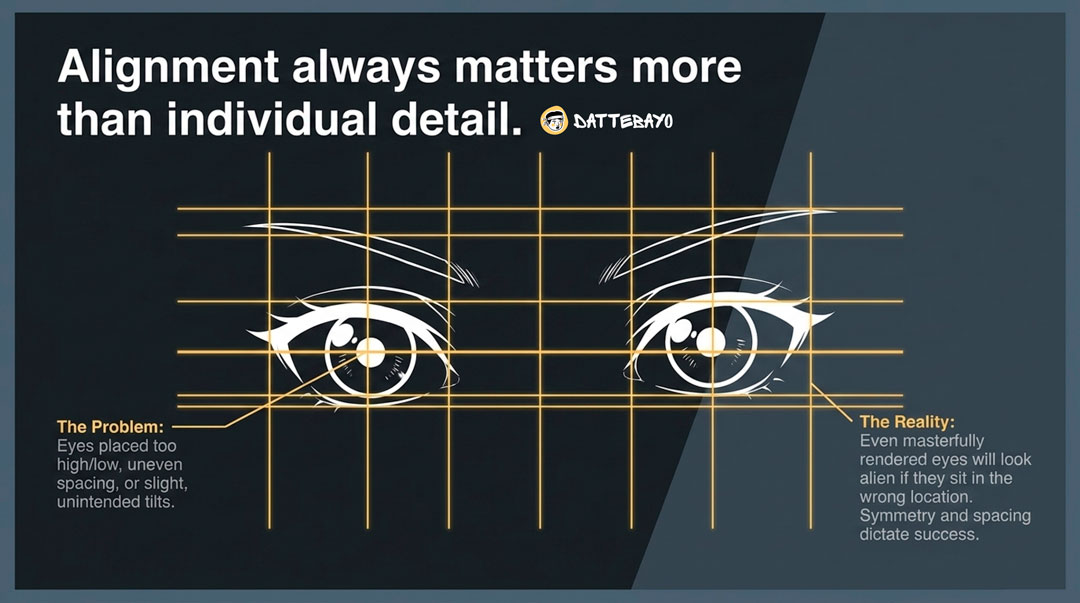
Common problems:
- Eyes placed too high or too low
- Uneven spacing
- Slight tilt differences between eyes
Even well-drawn eyes will look strange if they’re in the wrong spot.
That’s why guidelines matter more than detail, especially early on.
What should you focus on in your first drawings?
Focus on structure. Ignore polish.
Prioritize:
- symmetry
- spacing
- overall head shape
Ignore (for now):
- detailed lashes
- perfect linework
- complex shading
If the foundation works, everything else becomes easier.
Why do your anime drawings look “off”?
Because of proportion and alignment—not lack of effort.
When something feels wrong, it’s usually:
- misaligned features
- subtle tilts you didn’t intend
- proportions drifting as you draw
The fix isn’t more detail—it’s earlier correction.
How can you catch mistakes sooner?
Use simple checks, not complicated analysis.
Try:
- comparing left vs right sides
- checking features against your guidelines
- stepping back from your drawing
Digitally, flipping the canvas is one of the fastest ways to spot issues. Traditionally, a mirror or photo does the same job.
Are references actually helpful?
Yes—if you use them to understand, not just copy.
Instead of asking:
- “How do I replicate this?”
Ask:
- “Where are things placed?”
- “What shapes is this made of?”
That shift turns references into learning tools.
If you feel stuck here, it’s often because you’re missing feedback. That’s where platforms like Dattebayo help—you’re not just practicing, you’re learning how to spot and fix mistakes faster.
Do you need special tools to draw anime and manga?
No—simple tools are more than enough.
A pencil, eraser, and paper will take you surprisingly far. Early on, tools don’t matter nearly as much as understanding structure.
Which tools are best for beginners?
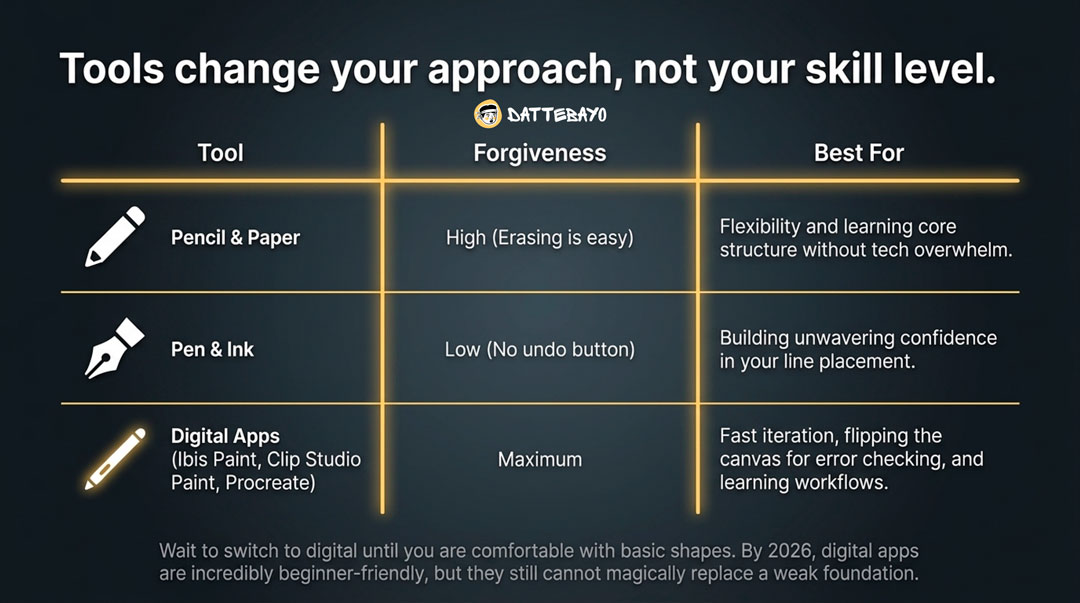
Each tool changes how you approach drawing.
- Pencil: flexible and forgiving
- Pen: builds confidence (no undo)
- Digital: fast iteration and easy corrections
By 2026, digital tools have become more beginner-friendly, especially apps designed around learning workflows—but they still don’t replace fundamentals.
What are good beginner drawing apps?
Solid options include:
- Ibis Paint
- Clip Studio Paint
- Procreate
They’re popular because they balance ease of use with powerful features—not because they magically improve your skills.
When should you switch to digital?
Once you’re comfortable with basic shapes and proportions.
If digital feels overwhelming, waiting is completely fine. The skills transfer easily later.
Should you copy anime characters or create your own?
Do both—but in the right order.
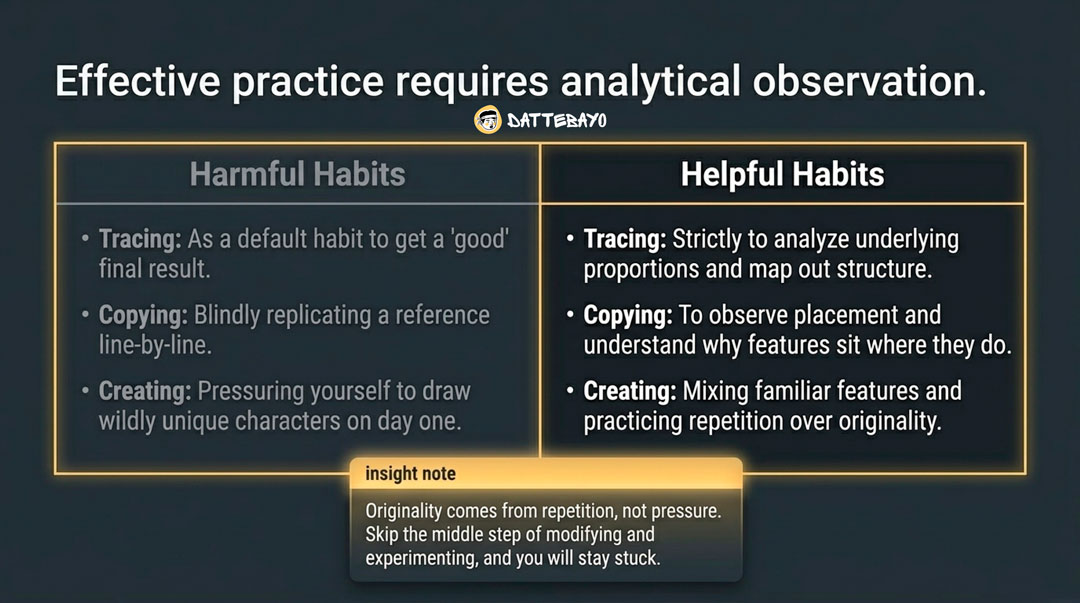
Copying helps you understand structure. But staying there too long holds you back.
A better progression:
- Copy to observe
- Modify to experiment
- Create from memory
Skipping that middle step is where most people struggle.
Is tracing helpful or harmful?
It depends on how you use it.
Helpful for:
- studying proportions
- analyzing structure
Not helpful if:
- it becomes your default
- you stop thinking about what you’re drawing
Treat tracing as a short-term study tool—not a habit.
How do you start your first original character?
Keep it simple and familiar.
You don’t need something wildly unique right away. Try:
- mixing features you like
- adjusting hairstyles
- changing expressions
Originality comes from repetition, not pressure.
How does anime style actually work?
It simplifies and exaggerates reality—but doesn’t ignore it.
Anime style is built on:
- simplified shapes
- exaggerated features
- controlled proportions
But underneath that is real structure.
Stylization works because it simplifies reality—not because it replaces it.
Do you need anatomy to draw anime?
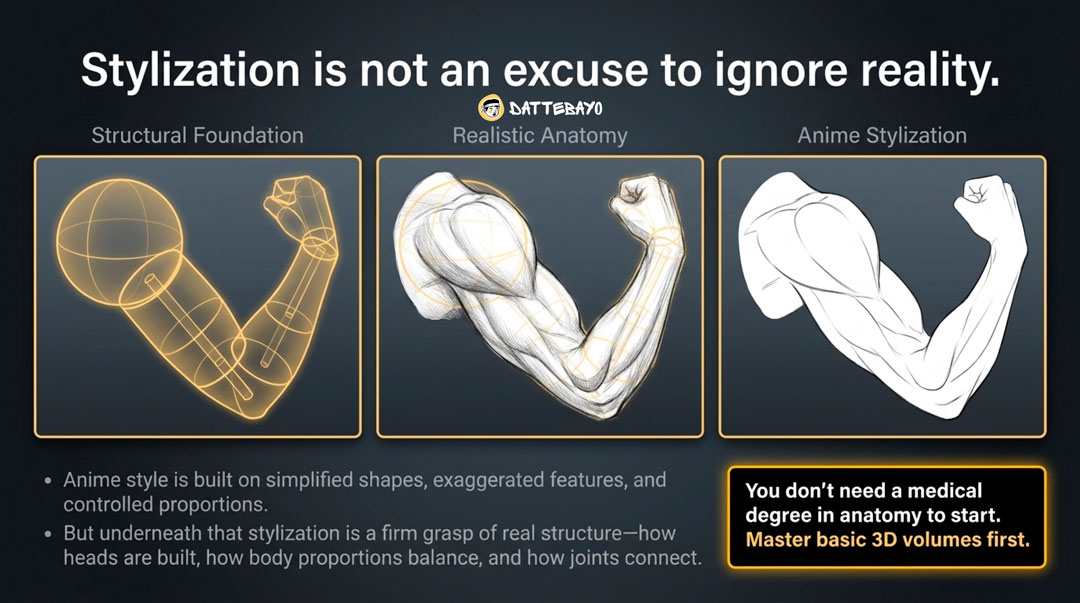
Yes—but only the basics at first.
Focus on:
- head structure
- simple body proportions
- how joints connect
You don’t need deep anatomical knowledge to start drawing well.
Why do beginner drawings look stiff?
Because they lack movement and flow.
When you focus only on “getting things right,” drawings become rigid.
What helps:
- a sense of direction
- balanced poses
- slight asymmetry
Even simple drawings feel better when they have movement.
What’s a simple learning roadmap you can follow?
Build skills in layers—from simple to complex.
A clear progression looks like:
- Basic shapes and line control
- Anime faces and proportions
- Features (eyes, hair, expressions)
- Full characters and poses
- Simple storytelling
Each stage reinforces the next.
What can you achieve in your first week?
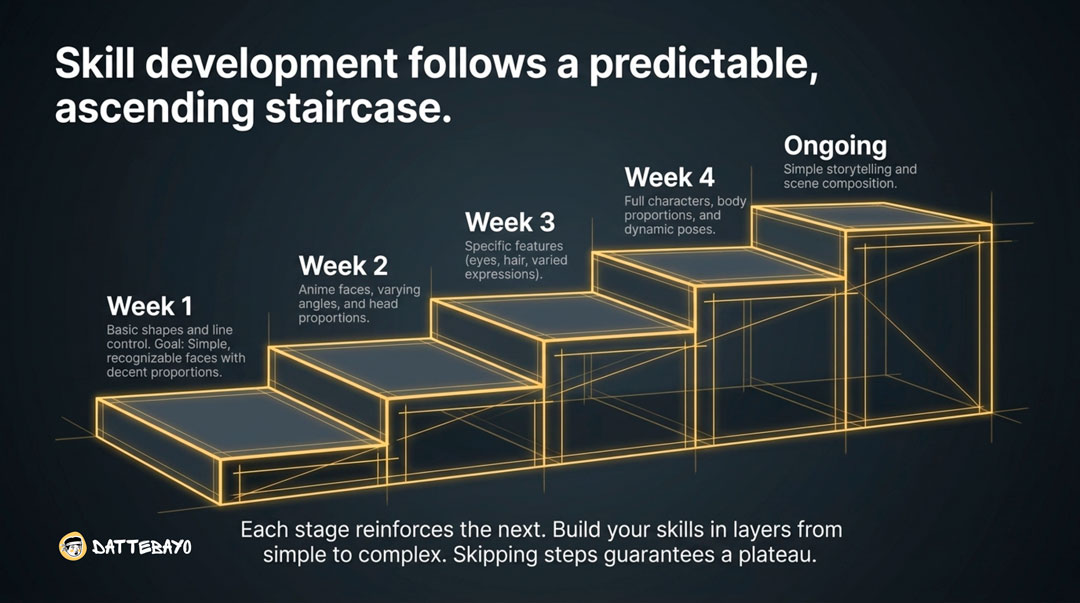
Simple, recognizable anime faces with decent proportions.
Not perfect—but clearly improving. That early progress matters more than polish.
What does effective practice look like?
Short, focused sessions beat long, unfocused ones.
Strong practice includes:
- repetition
- small corrections
- one clear focus at a time
This is where structured programs like Dattebayo’s beginner course help—you’re following a path instead of guessing what to do next.
Can you learn anime and manga drawing on your own?
Yes—but structure speeds everything up.
Self-learning gives you freedom, but also:
- confusion about what to prioritize
- slower progress due to repeated mistakes
How do you know if you’re stuck?
Your results feel inconsistent and hard to improve.
Watch for:
- drawings that vary wildly in quality
- not knowing what to fix
- repeating the same errors
At that point, feedback matters more than effort.
When does a course make sense?
When you want clarity and faster progress.
A good course shows you:
- why things work
- how to fix mistakes
- what to focus on next
That’s the idea behind Dattebayo: structured learning that builds confidence step by step.
What should you focus on after the basics?
Bring your drawings to life through expression, pose, and story.
Once you’re comfortable with faces and proportions, shift toward:
- expressions
- body language
- character interaction
How can you try simple manga storytelling?
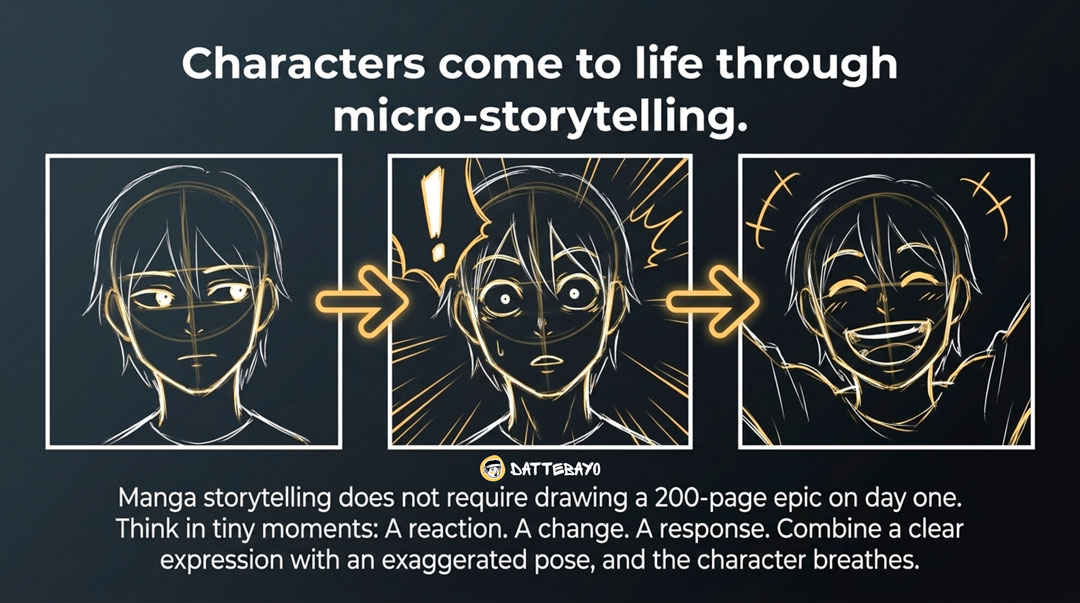
Keep it small—just a few panels.
Think in moments:
- a reaction
- a change
- a response
You’re not creating a full manga—just a tiny, clear story.
What makes a character feel alive?
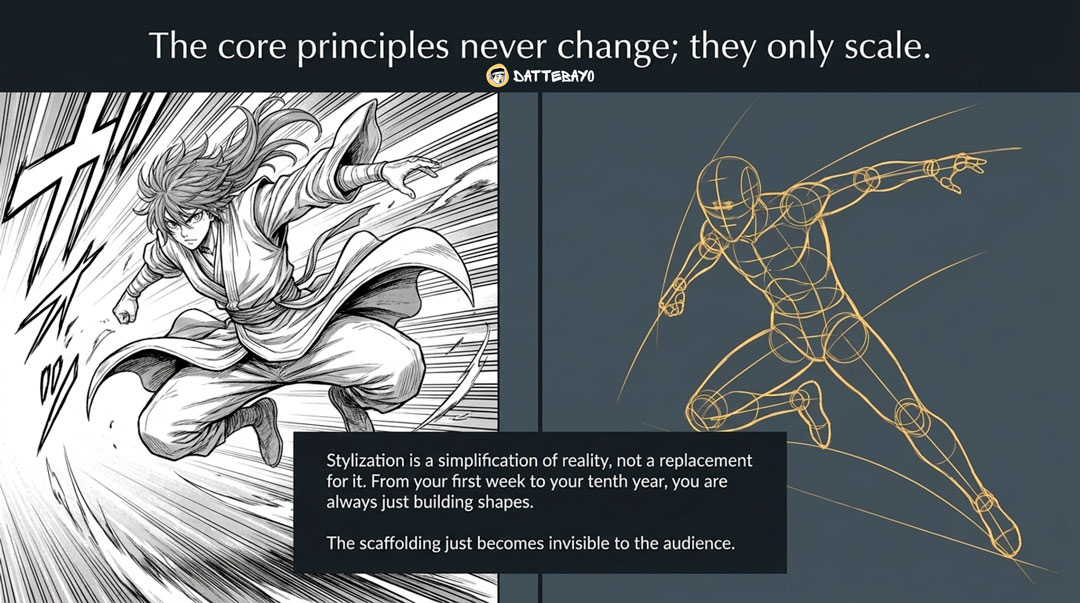
Expression + pose + exaggeration.
Even simple drawings feel dynamic when:
- the pose has movement
- the expression is clear
- the design supports the emotion
What beginner mistakes should you avoid?
Most come from rushing and ignoring structure.
Common issues:
- skipping construction lines
- drawing too dark too early
- focusing on details first
- copying without understanding
- inconsistent practice
What quick fixes actually help?
Small habits make a big difference.
- draw lightly so you can adjust
- check proportions early
- simplify before refining
These changes improve your results faster than any “secret trick.”
FAQ
Can I learn how to draw anime and manga if I’ve never drawn before?
Yes. Start simple and build gradually—everyone begins at zero.
What’s the easiest thing to draw first?
Basic anime faces using simple construction.
Why do my anime eyes look weird?
Usually spacing and placement—not detail.
Should I learn faces or full bodies first?
Start with faces, then expand.
Why is my line art messy?
Often from drawing too dark too early or rushing into final lines.
Do I need special tools?
No. Pencil and paper are enough.
What are the best beginner apps?
Ibis Paint, Clip Studio Paint, and Procreate.
How long does it take to improve?
With consistent, focused practice, you can see progress within weeks.
Can I learn without a course?
Yes—but structured learning helps you improve faster and avoid common mistakes.
If there’s one thing to remember, it’s this:
You don’t need talent to start—you need structure and a clear way to see what you’re doing.
Once that clicks, drawing anime and manga stops feeling confusing—and starts feeling genuinely fun.