
What are anime drawing references (and why do they matter)?
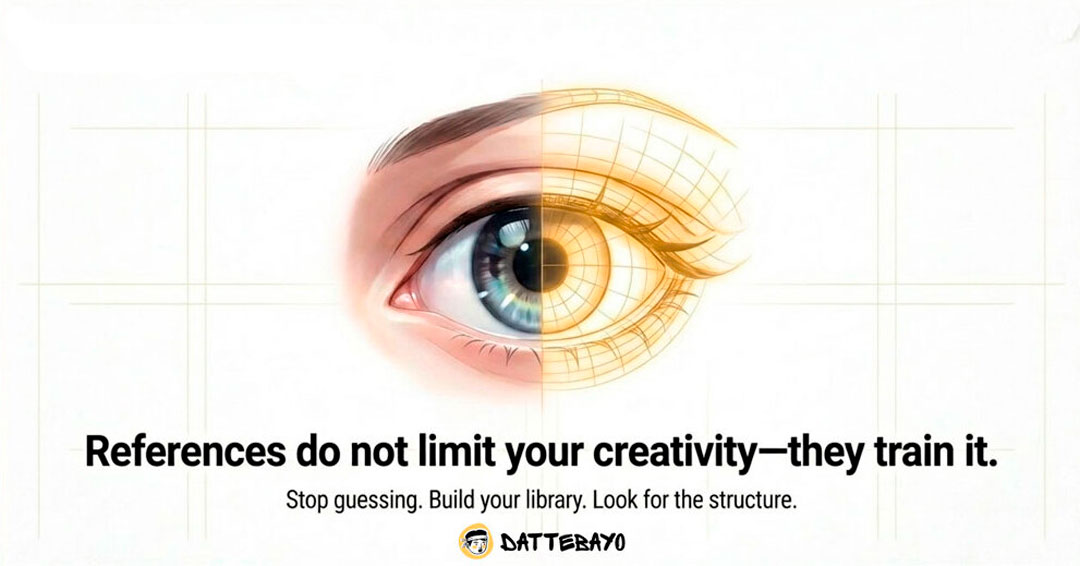
Anime drawing references are visual guides—photos, model sheets, screenshots, or pose libraries—that show you how things actually look instead of leaving you to guess. They bring structure, proportion, and clarity when your imagination hasn’t caught up yet.
If you’ve ever finished a drawing and thought, “Why does this feel off?”, it’s often because you were relying on memory alone. Even a “simple” anime face contains more subtle structure than it seems at first.
References aren’t a lazy shortcut—they’re a fast track to understanding. Professionals use them constantly, whether it’s studio model sheets or carefully built reference boards.
The goal isn’t to copy what you see—it’s to understand why it works.
Why drawing without references slows your progress
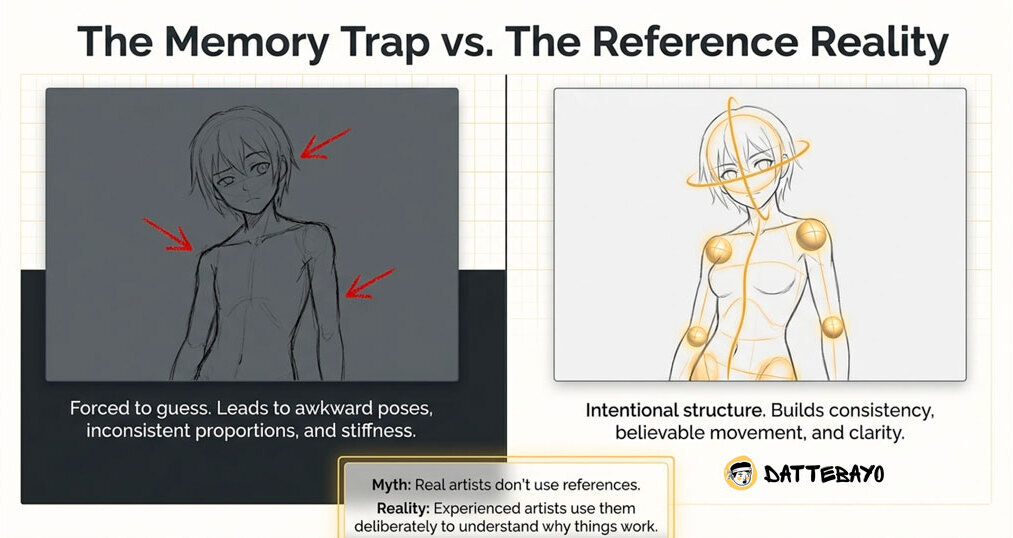
When you skip references, you’re forced to guess—and guessing leads to inconsistency.
That usually shows up as:
- Eyes that don’t quite align
- Stiff or awkward poses
- Proportions that feel “off” without a clear reason
There’s also a common myth: “real artists don’t use references.” In reality, experienced artists just use them more deliberately—and often in ways you don’t notice.
How anime artists actually use references
References aren’t just for figuring things out—they’re key for staying consistent.
In anime production, artists rely on:
- Model sheets for consistent character design
- Pose references to keep movement believable
- Lighting references to match scenes
Even solo artists organize references using tools like PureRef or curated boards. The difference isn’t whether references are used—it’s how intentional the process is.
What types of anime drawing references should beginners use?
Start simple. Clear faces, neutral poses, and basic lighting will teach you more than flashy action scenes.
Different types of references answer different questions, and knowing which one you’re using makes practice much more effective.
Face and expression references (best starting point)
Faces give you the fastest visible improvement and are easier to control.
Common beginner struggles include:
- Eye spacing and alignment
- Head shape consistency
- Expressions that feel unclear
Working from clean, readable face references helps you lock in structure without overload.
If you want a deeper foundation, something like anime face proportions can help you understand what you’re actually seeing.
Pose vs anatomy vs style references (simple breakdown)
Each type solves a different problem:
- Pose = How the body moves
- Anatomy = How the body is built
- Style = How it’s simplified or exaggerated
A lot of beginners lean too heavily on style (other anime art). That’s when drawings start to feel flat or unintentionally copied.
Lighting references (why they matter early)
Lighting is what makes a drawing feel solid—even in stylized anime.
Without a reference, shading often turns into guesswork. Even a single clear light source can dramatically improve readability.
Simple vs complex references (what to avoid early)
Simple references teach. Complex ones overwhelm.
For example:
- Neutral standing pose with clear lighting ✅
- Extreme action shot with dramatic perspective ❌
The second might look exciting, but it’s much harder to learn from.
Where to find good anime drawing references (free + reliable)
You don’t need dozens of sources—just a few solid ones and the ability to judge what’s useful.
High-quality reference sources (curated examples)
Some beginner-friendly options:
- Line of Action – great for poses and gesture
- Posemaniacs – helpful for understanding form
- Pinterest – useful if you curate carefully
- PureRef – ideal for organizing your references
- Anime screenshots – great for expressions and lighting
If you prefer something more structured, Dattebayo’s anime drawing course walks you through curated references so you’re not guessing what to use.
Real-life photo references (why they improve anime art)
Real photos solve problems anime references can’t.
They help you understand:
- Natural balance and weight
- Subtle asymmetry
- How bodies actually move
Even if your end goal is stylized, realism builds the foundation that makes stylization work.
How to tell if a reference is actually useful
A good reference is clear, readable, and complete.
Look for:
- Defined lighting
- A pose you can easily interpret
- Visible structure (not awkwardly cropped)
If you’re confused just looking at it, it won’t help you draw.
Bad references to avoid (common traps)
Watch out for:
- Over-rendered fan art
- Extreme perspective shots
- Blurry or low-resolution images
These tend to confuse more than they teach.
How many references should you use at once?
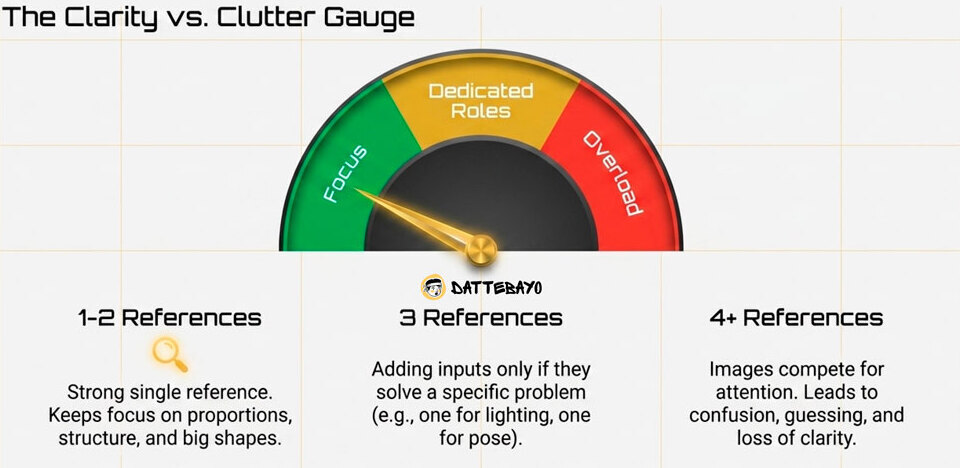
Start with one or two. Add more only when each one has a clear purpose.
Too few → guessing
Too many → overload
Using a single reference effectively
One strong reference is often enough.
It keeps your focus on:
- Proportions
- Structure
- Big shapes
Instead of constantly switching and losing clarity.
Combining multiple references without confusion
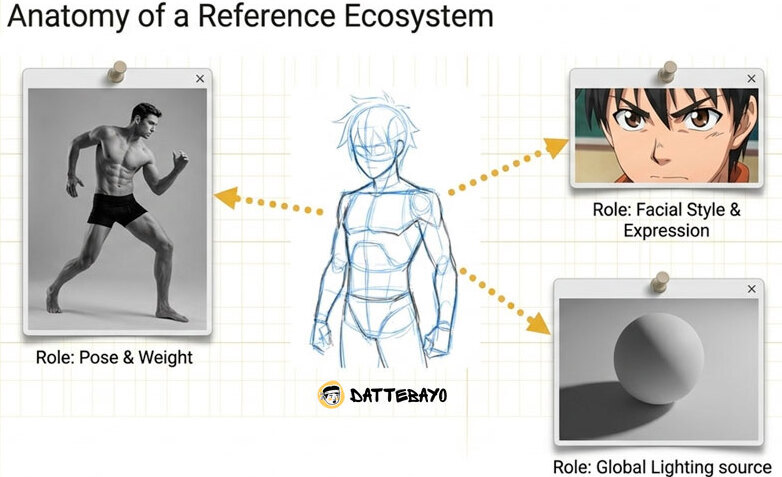
Multiple references work best when each has a role.
For example:
- One for pose
- One for lighting
- One for clothing
If they start competing for your attention, scale back.
How to use references to improve (not depend on them)
References should train your understanding—not replace it.
This is where many beginners get stuck: either copying too closely or never moving beyond references at all.
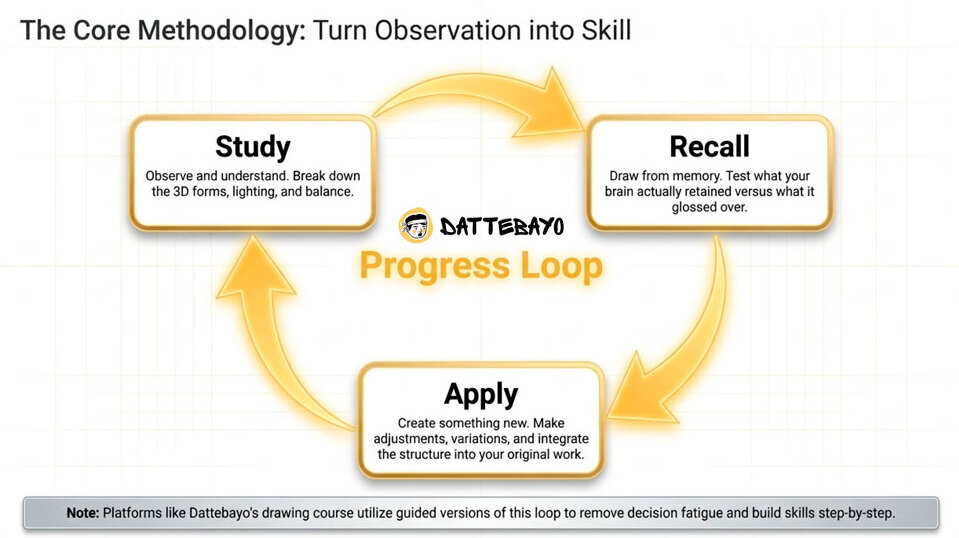
The “study → recall → apply” method (beginner version)
Progress happens in three stages:
- Study – observe and understand
- Recall – redraw from memory
- Apply – create something new
This is how you turn observation into skill.
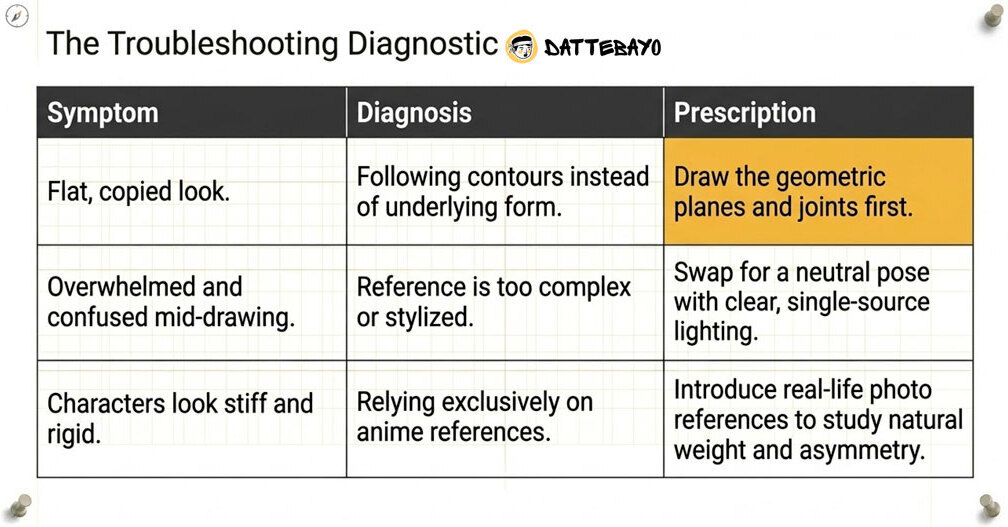
A simple 15-minute reference practice example
Short, focused sessions are more effective than long, unfocused ones.
A quick session might include:
- Observing a face or pose
- Drawing it from memory
- Making small adjustments or variations
The goal isn’t perfection—it’s processing what you saw.
When to stop using a reference mid-drawing
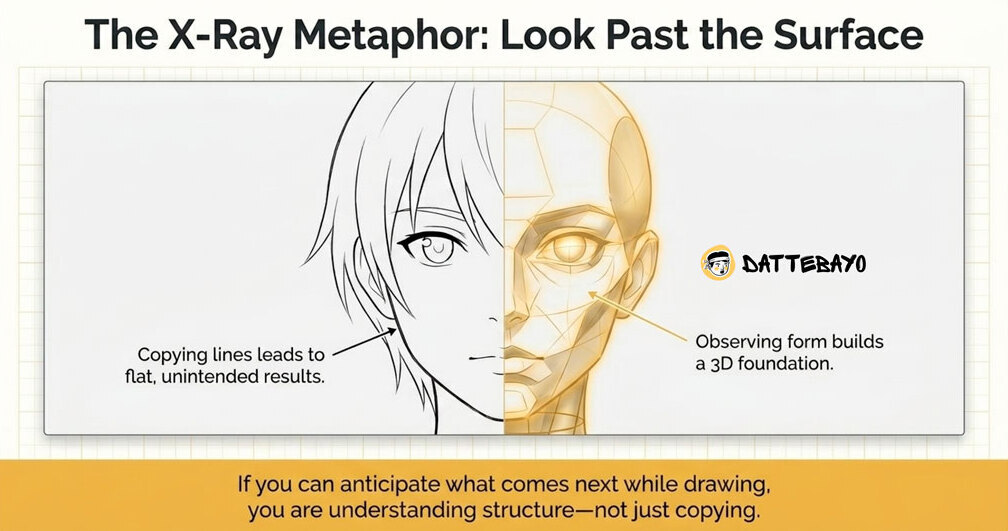
If you can anticipate what comes next, you don’t need to keep looking.
That’s a sign you’re understanding structure, not just copying lines.
How structured practice speeds this up
Structure removes decision fatigue and keeps you improving consistently.
That’s why platforms like Dattebayo emphasize guided learning. Instead of wondering what to practice, you follow a clear progression that builds your skills step by step.
Here’s a simple tool you can use to stay consistent:
Common mistakes when using anime drawing references (and how to fix them)
Most issues come from how you use references—not which ones you pick.
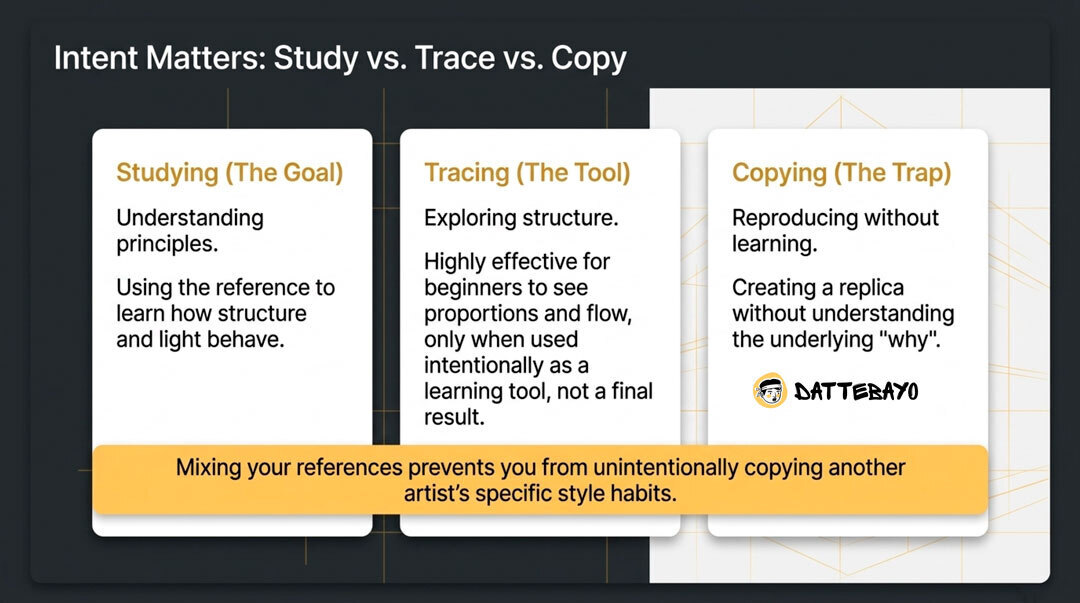
Copying lines instead of understanding structure
Fix: Focus on simple forms, not outlines.
If you only follow contours, you miss what actually makes the drawing work.
Using overly complex or stylized references too early
Fix: Choose clarity over flash.
Simple references teach faster—every time.
Ignoring perspective and foreshortening
Fix: Stick to readable angles first.
You don’t need extreme poses to improve.
Using too many references at once
Fix: Limit and assign roles.
Clarity beats quantity.
Relying only on anime references
Fix: Include real-life photos.
This alone can noticeably improve your work.
Is it okay to use other artists’ drawings as references?
Yes—if you’re using them to learn, not to replicate or present as your own.
The difference between studying, tracing, and copying
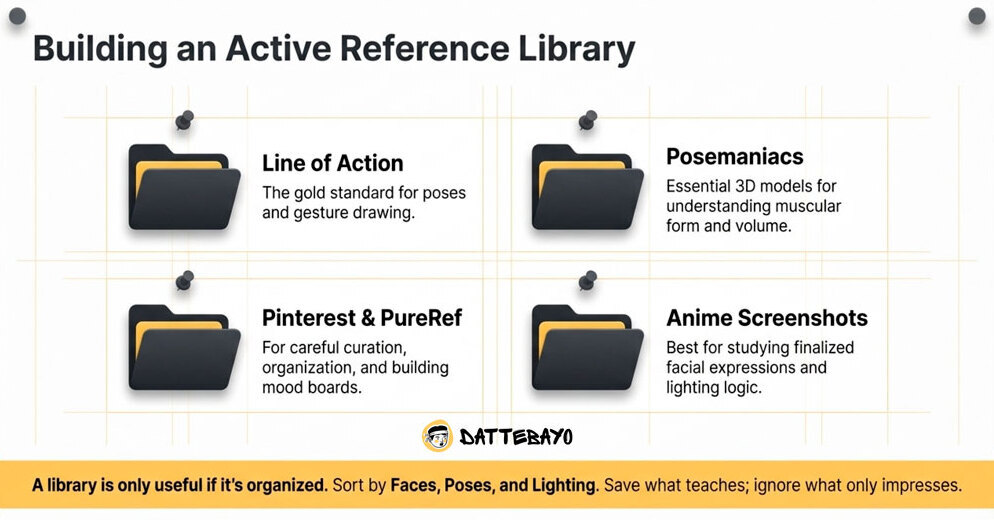
- Studying = understanding principles
- Tracing = exploring structure (when used intentionally)
- Copying = reproducing without learning
What matters is both your intent and what you take away from it.
Can you trace as a beginner?
Yes, as a learning tool—not a final result.
It can help you see proportions and flow more clearly, but it shouldn’t replace thinking.
How to avoid copying someone’s style unintentionally
Mix your references.
If you only study one artist, your work will naturally start to mirror theirs.
How to build your own reference library (and actually use it)
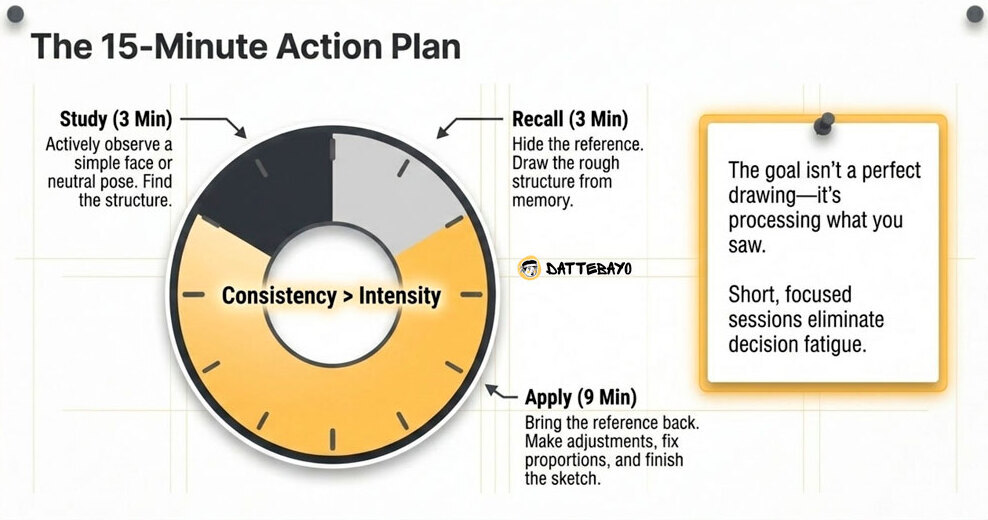
A good reference library is curated, organized, and actively used—not just saved.
Simple ways to organize references
- Folders (faces, poses, lighting)
- Pinterest boards
- PureRef boards
Keep it simple and easy to navigate.
What to save (and what to ignore)
Save what teaches. Ignore what only impresses.
A clean pose will help you improve more than a dramatic scene.
How a reference library improves your original characters
It speeds up decisions and improves consistency.
You’ll spend less time guessing—and more time creating.
Simple setup: using references without distraction
Your setup should support focus, not overwhelm you.
Digital setups (tablet, second screen, split view)
These make it easier to:
- Zoom in
- Compare references
- Arrange images freely
Low-tech setups (printed images, sketchbook)
These reduce distractions and help you stay focused.
Avoiding clutter and reference overload
Only keep what you actively need visible.
Everything else becomes noise.
FAQ
What are anime drawing references and why do beginners need them?
They’re visual guides that reduce guesswork and help you build accurate structure and confidence.
Where can I find good anime drawing references for free?
Line of Action, Posemaniacs, curated Pinterest boards, and anime screenshots are all solid options.
Can I trace anime references when learning?
Yes, but only as a study tool—not for finished work.
How many references should I use for one drawing?
Start with one or two, then expand only if each reference has a clear role.
What are the best pose reference sites for anime artists?
Line of Action and Posemaniacs are widely used and beginner-friendly.
Are Pinterest references reliable for anime drawing?
They can be—if you curate carefully and avoid low-quality or overly stylized images.
Why do my drawings still look wrong even with references?
You may be copying lines instead of understanding the underlying structure.
Why does my drawing look stiff even when using references?
You might be choosing rigid references or missing the overall flow of the pose.
Are real-life photos useful for anime drawing references?
Yes—they improve anatomy, balance, and natural movement.
What’s the difference between pose, anatomy, and style references?
Pose shows movement, anatomy shows structure, and style shows simplification.
If you take one thing from this, let it be this: references don’t limit your creativity—they train it.
Stick with clear, simple inputs. Focus on understanding instead of copying. And if you want a more guided path, Dattebayo can help you turn scattered practice into steady progress.
Consistency matters more than intensity. Even short, focused sessions add up faster than you expect.